What’s Included in a Complete Roof Replacement in Nashville
Every layer. Every component. Installed to manufacturer specs and Tennessee building code — so your warranty holds from day one.
Or call directly: (615) 824-8100 — 24/7 live operator

A roof is not just shingles.
It is a full system of components that work together to protect your home from water, wind, heat, and long-term damage. When one part is skipped, reused, or installed incorrectly, the entire roof can fail early. That is why at Mr. GoodRoof, we do not just replace shingles. We build complete roofing systems designed to perform the right way from day one.
What Makes Up a Complete Roofing System?
A complete roofing system includes every layer and detail that supports the life of your roof, including:
Each of these parts matters. If a contractor leaves out key items, reuses worn components, or cuts corners to create a lower bid, that can lead to leaks, rot, ventilation issues, and expensive repairs down the road.
Why the System Matters
Many homeowners compare roofing estimates and assume they are comparing the same job. Often, they are not.
One estimate may include only the visible roofing materials, while another includes the full system needed to protect the home properly. That difference is often why pricing can vary by thousands of dollars. The lower number may leave out critical items like flashing replacement, leak barrier, proper starter strip, custom ventilation design, or upgraded penetrations.
A complete roofing system helps prevent:
✗ Old flashing reused
✗ No ventilation assessment
✗ Cheap rubber pipe boots
✗ Warranty compliance unknown
✗ No permit pulled
✓ All new flashing installed
✓ Custom ventilation designed
✓ Lifetime-grade pipe boots
✓ Full warranty compliance
✓ Permits pulled when required
The Layers Beneath the Shingles
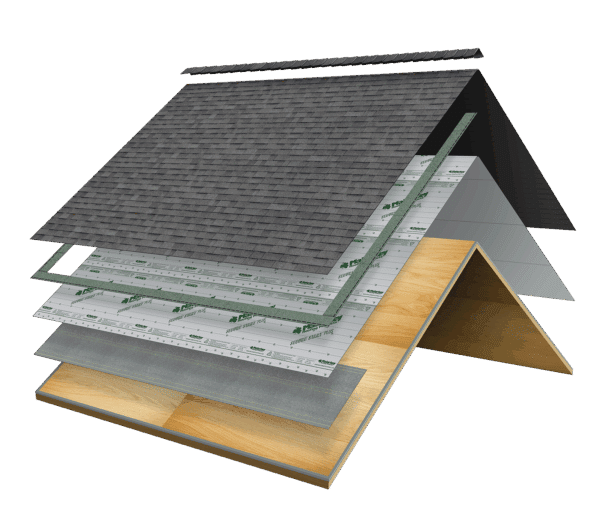
The shingles are only one part of the job. What goes underneath them is just as important.
Synthetic Underlayment
Synthetic underlayment provides a durable, water-resistant barrier beneath the shingles. If wind damages shingles during a storm, this layer helps keep water out and protects the home underneath.
Ice and Water Leak Barrier
Leak barrier is installed in the most vulnerable areas of the roof, including eaves, valleys, penetrations, and flashing areas. These are the places where water is most likely to back up or work its way in during storms or ice events.
Starter Strip and Ridge Cap
Starter strip helps seal the perimeter of the roof, where high winds often begin lifting shingles. Ridge cap protects the top of the roof, where wind pressure is strongest and water intrusion can become a major issue if inferior materials are used.
Flashing Is One of the Biggest Missed Components
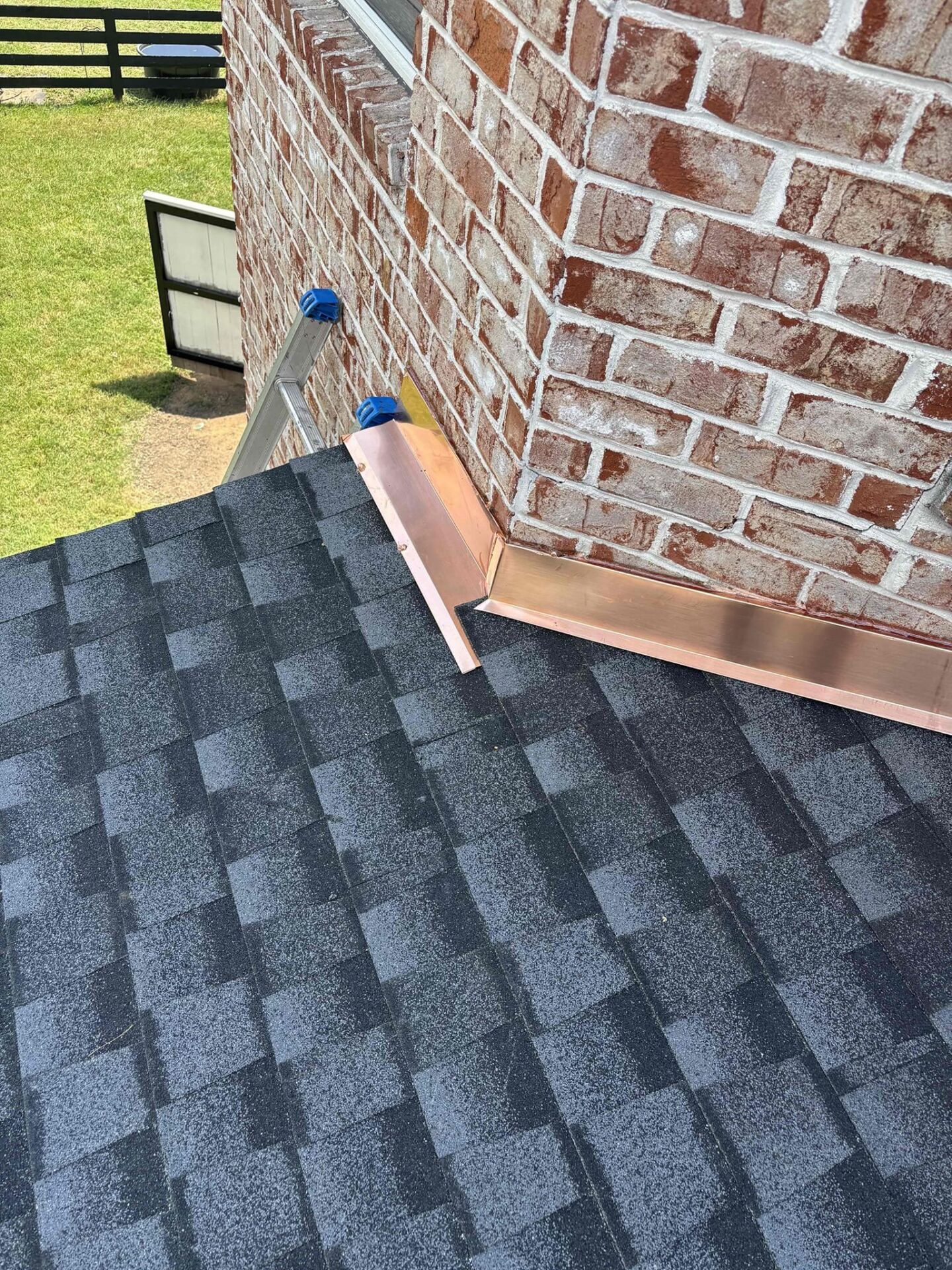
One of the most common shortcuts in roofing is reusing old flashing.
Flashing protects some of the most water-prone parts of the roof, including chimneys, dormers, walls, and transitions. If flashing is bent, rusted, worn out, or simply reused during a new roof installation, it can become the source of leaks long before the shingles wear out. At Mr. GoodRoof, flashing is treated as an essential part of the roofing system, not an afterthought.
Ventilation Is Not Optional
A roof must breathe properly in order to last.
Without proper attic ventilation, heat and moisture build up inside the system. That trapped heat can cook the shingles from underneath and dramatically shorten the life of the roof. Poor ventilation can turn a long-life roof into one that fails years too early.
That is why ventilation should never be guessed at.
Mr. GoodRoof customizes ventilation based on the home, rather than applying the same vent style to every roof. Not every house should have ridge vent. Some roof designs require a different solution, and proper calculation matters. That is a key part of building a complete roofing system that actually performs as intended.
We custom-design ventilation for every home in Nashville. See how we calculate it
Or call directly: (615) 824-8100 — 24/7 live operator
The Small Components Matter Too
Some of the biggest future leaks come from the smallest penetrations.
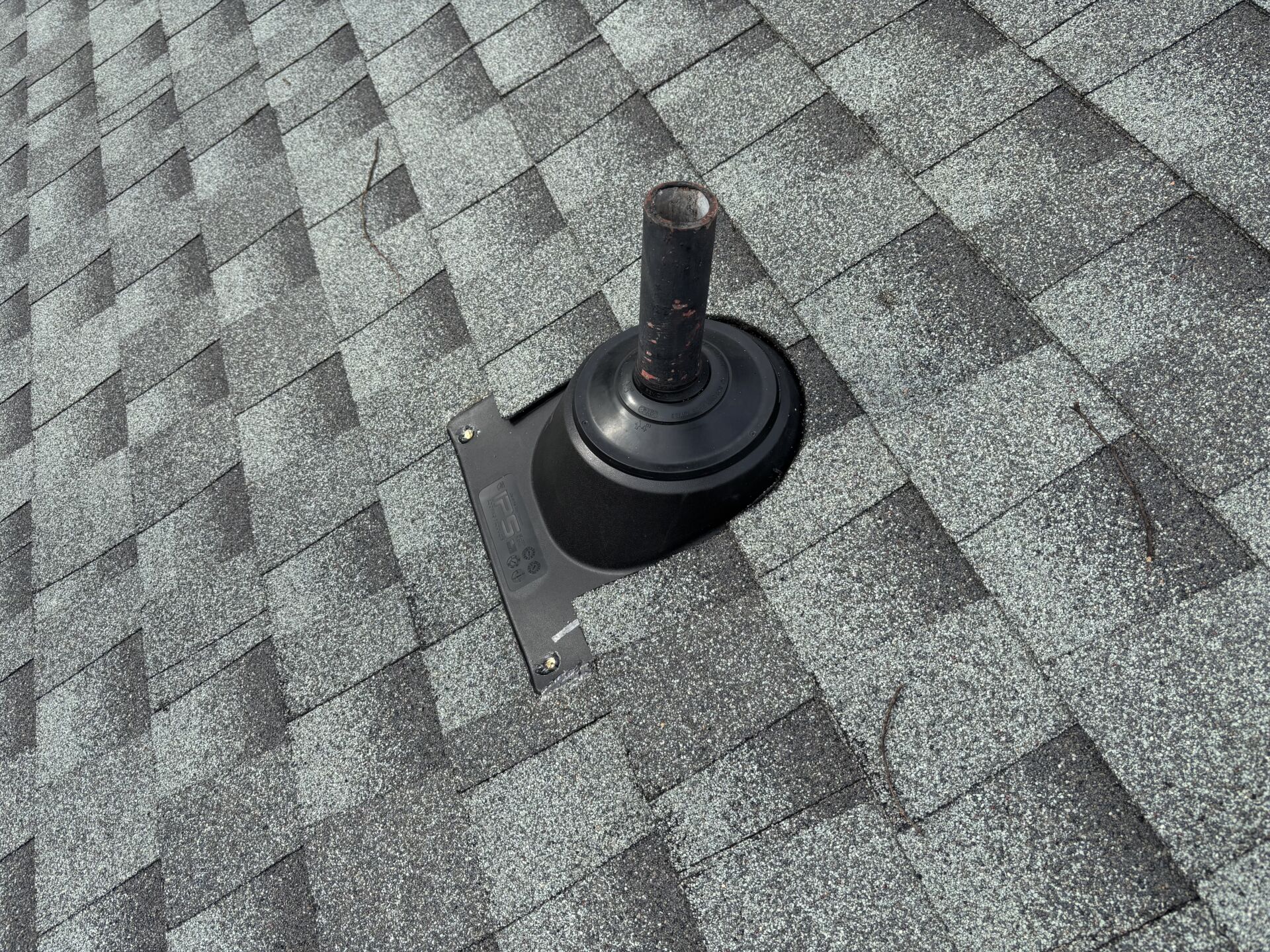
Pipe boots, vent pipes, and exposed roof penetrations are often weak points on a roof. Cheap plastic or rubber components can fail long before the shingles do. Mr. GoodRoof emphasizes longer-lasting, more durable materials for these areas because it makes no sense to install a 30-year roof with 10-year accessories.
The 10 Components Every Nashville Roof Replacement Should Include
The structural base everything is built on. During tear-off, we inspect every board for rot, soft spots, or water damage. Any compromised decking is replaced before a single new shingle goes down — because a new roof on bad decking fails early, no matter how good the materials are.
The layer that sits directly on the decking beneath your shingles. If shingles are damaged in a storm, underlayment is the last line of defence before water reaches the interior of your home. We use heavier-weight synthetic underlayment rather than cheaper felt paper on every installation — it’s more durable, more water-resistant, and more tear-resistant.
A self-adhering membrane installed in the most vulnerable areas: eaves, valleys, and around all penetrations. Nashville’s freeze-thaw cycles make this critical — water that gets under a shingle in winter can back up under the ice and into the structure. Most contractors use the minimum required by code. We install it anywhere water is likely to travel.
The first course of material along the roof’s perimeter. It seals the bottom edge of the field shingles and prevents wind from lifting them at the eaves and rakes — the most wind-exposed parts of the roof. Skipping starter strip is one of the most common ways a cheap roof fails in the first wind event.
The primary visible surface of the roof. We offer architectural asphalt, impact-resistant Class 4, and designer options through GAF and CertainTeed. In Nashville’s hail-prone climate, Class 4 impact-resistant shingles are worth considering — they can reduce insurance premiums and outlast standard shingles significantly.
Specialized shingles that protect the peak of the roof — the point where wind pressure is highest and water intrusion is most likely if inferior materials are used. Standard shingles bent over the ridge void their own warranty. Proper ridge cap shingles are a non-negotiable part of a complete system.
Metal that seals every point where the roof meets another surface: chimneys, dormers, wall transitions, skylights, and valleys. We replace all flashing on every re-roof. Never reused. Old flashing is bent, corroded, and no longer forms a watertight seal — and reusing it is a manufacturer warranty violation that most homeowners never find out about until it leaks.
Metal flashing along the eaves and rakes that directs water off the roof edge and away from the fascia. Without it, water wicks back under the shingles and rots the decking and fascia from underneath. Required by code in Tennessee — but still frequently skipped by contractors cutting corners on lower bids.
Proper attic ventilation requires a balance of intake at the soffits and exhaust at or near the ridge. Without enough intake, exhaust vents pull conditioned air from inside your home instead of hot attic air. We calculate the specific ventilation needs of your home — square footage, pitch, soffit configuration — before a single vent is installed. Not every house gets ridge vent. Some need a different solution entirely.
Every pipe, vent, and penetration through your roof is a potential leak point. Cheap rubber or plastic boots degrade in 8–12 years — long before your 30-year shingles. We use longer-lasting materials on every penetration because it makes no sense to install a 30-year roof with 10-year accessories.
A Complete Roofing System Starts With a Real Inspection
A proper roof replacement begins before installation day.
It starts with a true inspection of the roof, not a quick drone pass or a vague estimate. A detailed inspection helps identify issues with decking, flashing, ventilation, penetrations, drainage, and system design before they become problems during the build. It also allows the roofing system to be customized to the home instead of treated like a one-size-fits-all replacement.
Installed by In-House Teams, Not Random Subcontractors
A complete roofing system only works if it is installed correctly.
Mr. GoodRoof’s transcript repeatedly points to accountability, training, and in-house coordination as a major differentiator. The focus is not just on materials, but on experienced crews, project oversight, preparation, cleanup, and doing the job to company standards from start to finish.
★★★★★ 4.8 out of 5 Roof Replacement Reviews
See More Reviews
Mr GoodRoof Nashville
1134 Murfreesboro Pike, Nashville, TN 37217
Nashville Phone: (615) 824-8100
Frequently Asked Questions About Complete Roofing Systems
Q1: What is included in a complete roofing system?
A1: A complete roofing system includes roof decking, synthetic underlayment, ice and water leak barrier, starter strip, field shingles, ridge cap, flashing, drip edge, ventilation, pipe boots, soffits, fascia, and gutters — every layer working together to protect the home.
Q2: Why is a complete roofing system better than just replacing shingles?
A2: Shingles are only one part of the roof. Missing or worn underlayment, flashing, ventilation, or leak barrier can cause the roof to fail early regardless of shingle quality. A complete system protects against leaks, rot, ventilation issues, and premature deterioration.
Q3: How do I know if my roof was installed as a complete system?
A3: The best way to know is through a professional inspection. Many homeowners are never told what materials were used underneath the shingles. A thorough inspection can identify whether key components like flashing, leak barrier, ventilation, and drip edge were properly installed.
Q4: Does ventilation really affect the life of a roof?
A4: Yes. Poor ventilation traps heat and moisture in the attic, which shortens shingle life and can lead to mold, rot, and higher energy costs. Proper intake and exhaust ventilation are essential for long-term roof performance.
Q5: What are the most important parts of a roofing system besides shingles?
A5: The most important parts include synthetic underlayment, ice and water leak barrier, flashing, starter strip, ridge cap, ventilation, drip edge, and pipe boots. These components protect the most leak-prone and weather-exposed areas of the roof.
Q6: Why do roofing estimates vary so much in Nashville?
A6: Roofing estimates vary because not every company includes the same scope of work. One quote may cover a complete roofing system while another covers only basic shingles and underlayment. Missing components like flashing replacement, leak barrier, or ventilation upgrades can significantly affect both price and long-term value.
Q7: Do homes in Nashville, Franklin, Brentwood, and Hendersonville need special roofing considerations?
A7: Yes. Middle Tennessee homes deal with heavy rain, strong winds, summer heat exceeding 150°F in attics, and occasional freeze events. A roofing system in this region should be designed to handle storm exposure, water flow, attic heat, and seasonal weather changes.
Q8: How often should a roofing system be inspected?
A8: Most roofs should be inspected after major storms, when a home is being bought or sold, when leaks appear, or when the roof is showing signs of age. Regular inspections help catch issues before they turn into expensive repairs.
The Bottom Line
A roof replacement should not be treated like a shingle swap.
It should be treated like a full exterior protection system for one of your biggest investments. When every component is chosen carefully, installed correctly, and designed to work together, you get a roof that lasts longer, performs better, and helps you avoid expensive surprises later.
That is the difference between just replacing a roof and installing a complete roofing system.
Call for immediate assistance.
⚠️Emergency Repairs? We’re on it.
📅 Same-Day Appointments Available
✅ Free Inspection