Nashville Heat Advisory · July 27–28, 2026
Does Your Upstairs Feel Like a Sauna During Nashville’s Heat Advisory?
Your air conditioner may not be the only issue. When attic intake and exhaust are blocked, undersized, mixed incorrectly, or out of balance, super-heated attic air can add to the heat your cooling system must overcome. Mr. GoodRoof calculates the airflow your home needs and checks the complete roof-and-attic ventilation system.
Lomanco-trained ventilation process · Intake and exhaust calculated together · Repair-first guidance · Serving Middle Tennessee since 1995
Quick Answer
Can poor attic ventilation make the upstairs harder to cool?
Yes, it can contribute. During extreme Middle Tennessee heat, a poorly ventilated attic may trap super-heated air beneath the roof deck. That heat can radiate toward upstairs rooms and add to the load the air-conditioning system must manage. Proper ventilation uses lower intake and upper exhaust to move hot, humid air out of a vented attic.
Ventilation is not the only possible cause of a hot upstairs. Insulation gaps, air leakage, duct problems, HVAC sizing, windows, and room layout can also matter. A useful inspection should calculate attic ventilation, check soffit intake and roof exhaust, look for blocked baffles or mixed exhaust vents, and explain whether the right next step is ventilation repair, insulation or HVAC evaluation, roof repair, or no roofing work at all.
Current Nashville Heat Alert
What does the July 27–28 Nashville Heat Advisory mean?
The National Weather Service Nashville office lists a Heat Advisory and Extreme Heat Warning across parts of Middle Tennessee. The NWS says temperatures are warming into the mid-90s with triple-digit heat indices. WSMV reports that the Heat Advisory covers the I-65 corridor from Monday morning through Tuesday evening, while much of the area west of I-65 is under an Extreme Heat Warning, with feels-like temperatures of 100°–110°.
Follow official heat-safety guidance: reduce strenuous outdoor activity, take breaks, stay hydrated, use air-conditioned spaces, and check on children, older adults, pets, and anyone working outside.
Weather information last reviewed July 27, 2026. Sources: National Weather Service Nashville and WSMV First Alert Weather.

Watch the 25-Second Explanation
Your hot upstairs may point to an attic-airflow problem
Video summary
“Does your upstairs feel like a sauna? You’re not the only one. Your attic may be trapping heat, making the upper floor uncomfortable and adding to the work your cooling system must do. The problem may not be your AC alone—it may be your roof ventilation. The good news is that many ventilation problems can be corrected without replacing the full roof. Schedule your free attic ventilation check today. Mr. GoodRoof—the Good Guys in Roofing.”
The page summary uses qualified language because every home requires an individual airflow calculation. The video’s campaign statements should not replace a measured attic ventilation assessment.
Do Not Blame the AC Too Quickly
Why can upstairs rooms stay hot even when the AC is running?
A hot second floor can have more than one cause. The right solution starts by separating roof-and-attic airflow problems from insulation, duct, air-sealing, window, and HVAC issues.
Trapped attic heat
Limited exhaust or blocked intake can allow heat to collect beneath the roof deck instead of moving through the attic.
Blocked soffit intake
Insulation, paint, debris, missing baffles, or limited soffit openings can prevent outside air from feeding the exhaust system.
Air sealing or insulation gaps
Heat transfer and air leakage between the attic and living area can make upstairs spaces uncomfortable even when roof vents are present.
Duct or HVAC concerns
Leaky ducts, airflow imbalance, equipment sizing, thermostat placement, or system performance may contribute and may require an HVAC professional.
Ventilation should be calculated—not guessed.
More vents are not automatically better. The home needs the right Net Free Area, sufficient lower intake, appropriate upper exhaust, and one coordinated exhaust approach within each common attic area.
How Balanced Attic Ventilation Works
What are intake, exhaust, and Net Free Area?
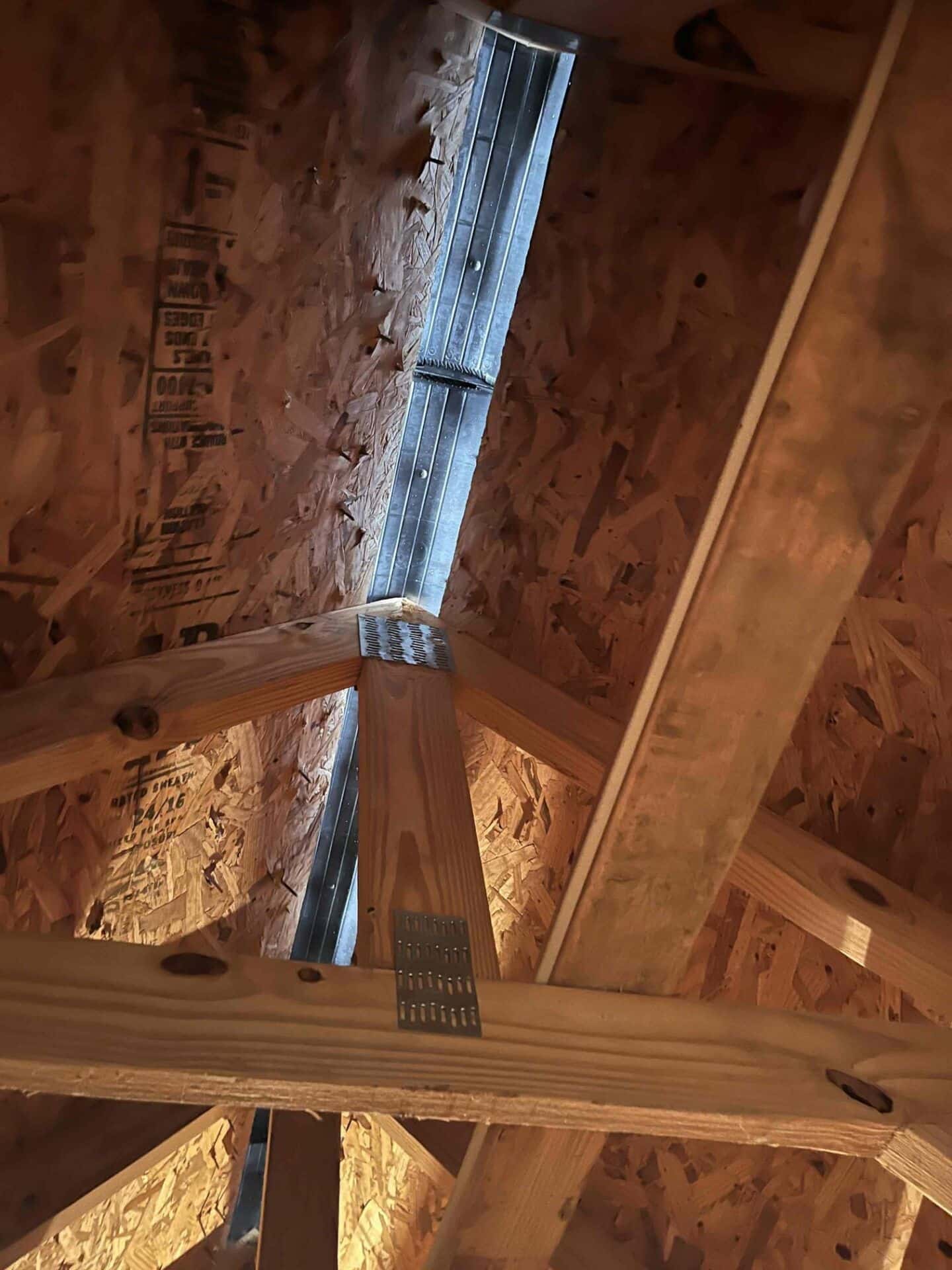
A vented attic needs a path for outside air to enter low and hot, humid attic air to leave high.
- Intake ventilation: Usually located at the soffits or lower roof area, bringing outside air into the attic.
- Exhaust ventilation: Ridge vents, box vents, turbines, powered vents, solar vents, or gable vents that let attic air escape.
- Net Free Area: The actual open airflow capacity of a vent after screens, louvers, and product design are considered.
- Balance: Intake capacity should meet or exceed exhaust capacity so exhaust vents pull from the lower intake path.
Lomanco’s residential calculation guidance commonly begins with one square foot of ventilation for every 300 square feet of enclosed attic floor, split between intake and exhaust, while noting that local codes may require a 1:150 ratio. The final design must follow the applicable code, product instructions, and actual roof configuration.
Signs of a Possible Ventilation Problem
When should you schedule an attic ventilation check?
- Upstairs rooms stay noticeably hotter than the first floor
- The AC runs for long periods without making the upper floor comfortable
- The attic feels excessively hot, humid, or musty
- Condensation, staining, damp insulation, or moisture appears in the attic
- Soffit vents are missing, blocked, painted over, or covered by insulation
- Different types of exhaust vents are mixed within the same attic area
- Shingles or roof decking show possible heat- or moisture-related stress
- A roof replacement estimate does not address attic intake and exhaust
These signs do not prove that ventilation is the only problem. They indicate that the attic, roof system, insulation boundary, and airflow path deserve a closer look.

Free Attic Ventilation Check
What does Mr. GoodRoof inspect and calculate?
Attic floor area and roof layout
We use the enclosed attic area, roof shape, ridge length, slopes, hips, valleys, and separate attic zones to understand the airflow demand.
Intake ventilation
We check soffit vents, lower roof intake, baffles, insulation blockage, paint, debris, and whether the available intake can supply the exhaust.
Exhaust ventilation
We evaluate ridge vents, box vents, turbines, powered vents, solar vents, and gable vents for type, placement, condition, and calculated capacity.
Net Free Area and system balance
We compare product-rated airflow capacity and check whether intake meets or exceeds exhaust within the common attic space.
Heat, moisture, and roof-system evidence
When access and conditions allow, we review attic temperature, moisture signs, insulation placement, decking condition, roof penetrations, and premature material wear.
Clear next-step recommendation
You receive an explanation of whether the responsible next step is vent repair, soffit correction, baffles, a redesigned system, roof repair, future replacement, HVAC evaluation, or no work.
Ventilation Options
Which type of roof vent is right for a Middle Tennessee home?
No single vent type is best for every house. Roof design, ridge length, intake capacity, attic zones, and existing equipment determine the right approach.
| Vent type | May fit | Important limitation |
|---|---|---|
| Ridge vent | Roofs with sufficient continuous ridge and clear lower intake | Limited ridge length or blocked soffits can reduce effectiveness |
| Box vents | Hip roofs, complex rooflines, or attics with limited usable ridge | Quantity, placement, height, and intake balance matter |
| Turbine vents | Some larger attics with adequate intake and appropriate roof design | Moving parts require maintenance; intake must support the exhaust |
| Powered or solar vents | Specific heat or moisture situations after system calculation | Can pull conditioned air from the home if air sealing or intake is inadequate |
| Gable vents | Supplemental airflow on some gable-roof homes | May conflict with other exhaust types and may not be a complete solution |
| Soffit or roof-edge intake | The lower intake side of most balanced systems | Often blocked by insulation, paint, debris, or inadequate vented area |
Repair Before Replacement
Can attic ventilation be fixed without replacing the roof?
Often, yes. A ventilation problem may be corrected by clearing or adding intake, installing baffles, repairing damaged vents, replacing one coordinated exhaust type, or correcting soffit and fascia conditions.
- Blocked soffit intake correction
- Baffle or rafter-vent installation
- Ridge-vent repair or installation
- Box-vent or turbine-vent repair
- Powered or solar vent installation in qualifying situations
- Gable-vent repair
- Soffit and fascia work that restores intake airflow
Ventilation may be best redesigned during roof replacement when the existing roof is failing, the deck requires work, or the current ventilation plan cannot be corrected responsibly without coordinating the entire system.
Middle Tennessee Geographic Relevance
Free attic ventilation checks across the Nashville area
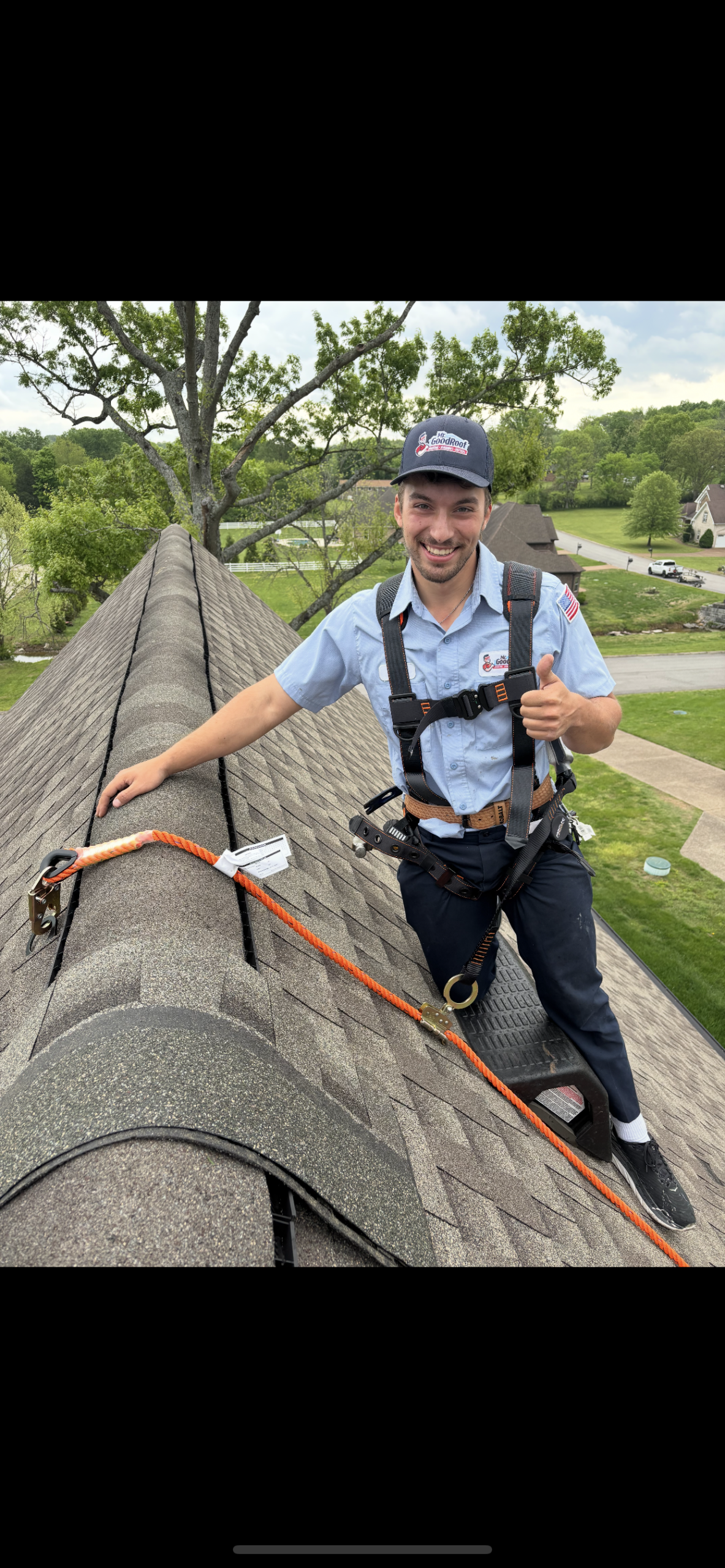
This page supports the local service pages and Google Business Profile activity for the communities Mr. GoodRoof actually serves. A service-area section helps users find the correct local path; it does not by itself create Map Pack rankings.

Nashville
Hot upstairs rooms, attic heat, blocked soffits, ridge vents, box vents, and full-system airflow evaluations in Davidson County.
Nashville roof ventilation →Franklin
Attic ventilation evaluations for Franklin homes with complex rooflines, large attic zones, humidity, and upstairs comfort concerns.
Franklin roof ventilation →Brentwood
Calculated intake and exhaust recommendations for larger homes, long ridgelines, hip roofs, and multiple attic areas.
Brentwood roof inspection →Hendersonville
Roof and attic ventilation inspections for Sumner County homes with heat buildup, moisture, blocked intake, or aging vents.
Hendersonville roof ventilation →Murfreesboro
Ventilation and roof-condition inspections for Rutherford County homes experiencing uneven upstairs temperatures or attic heat.
Murfreesboro roof inspection →Mr. GoodRoof also serves Gallatin, Mt. Juliet, Smyrna, Spring Hill, Clarksville, Columbia, Dickson, and surrounding Middle Tennessee communities.
Do Not Guess at the Vent Count
Schedule your free attic ventilation check
We will calculate the airflow demand, inspect intake and exhaust together, document what we find, and explain whether the right answer is a ventilation repair, soffit correction, roof work, HVAC evaluation, or no work.
Appointment availability depends on location, weather, safe attic access, and current service demand.
Request your ventilation check
Hot Upstairs & Ventilation FAQs
Frequently asked questions during a Nashville heat advisory
Why is my upstairs so hot even though the AC is running?
Attic heat may be one contributor. Poor intake, limited exhaust, blocked soffits, insulation gaps, air leakage, duct problems, windows, room layout, or HVAC performance may also matter. A ventilation inspection can determine whether the roof-and-attic system is adding to the problem.
Does adding more roof vents automatically make the attic cooler?
No. The system needs calculated Net Free Area and balanced intake and exhaust. Adding exhaust without enough intake—or mixing exhaust types—can create a system that still underperforms.
Are ridge vents always the best roof vents?
No. Ridge vents work well on many roofs with sufficient ridge length and lower intake. Hip roofs, complex rooflines, limited ridges, separate attic zones, or blocked soffits may require another design.
Can an attic fan make the AC work harder?
It can in some homes. ENERGY STAR warns that attic fans may pull conditioned air from the living space when soffit intake is blocked or the attic is not well air-sealed from the house.
Can ventilation be repaired without replacing my roof?
Often, yes. Blocked intake, damaged vents, missing baffles, limited exhaust, or a specific soffit problem may be corrected as a standalone project. Replacement is considered when the broader roof system is failing or ventilation cannot be redesigned responsibly without coordinating the roof.
What is Net Free Area?
Net Free Area is the unobstructed airflow capacity of a vent after screens, louvers, and product design are considered. It is the value used to calculate how much intake and exhaust the attic needs.
Does Mr. GoodRoof offer free attic ventilation checks?
Yes. Mr. GoodRoof offers free ventilation inspections for qualifying residential needs across Nashville and surrounding Middle Tennessee communities. The inspection explains the airflow problem and appropriate next steps.
Does roof ventilation affect a shingle warranty?
It can. Manufacturer installation requirements may include attic ventilation, and improper ventilation may affect roof performance or coverage depending on the product, system, installation, and nature of the claim. It does not automatically void every warranty.
Reviewed & Source-Backed
Heat and attic-ventilation sources
- National Weather Service Nashville: current Heat Advisory and Extreme Heat Warning information
- WSMV: July 27–28, 2026 Nashville-area heat and humidity forecast
- ENERGY STAR: natural attic ventilation, insulation, air sealing, and attic-fan cautions
- Lomanco: attic ventilation calculation, Net Free Area, and intake/exhaust balance
- Lomanco: coordinated exhaust types and balanced intake/exhaust guidance
- International Residential Code: minimum vent-area provisions
Reviewed by the Mr. GoodRoof roofing team. Weather details last checked July 27, 2026. Individual comfort and ventilation recommendations require inspection of the home.