Nashville & Middle Tennessee · September heat dome
Nashville Heat Dome: What Is This Heat Doing to Your Roof?
Hot upstairs? Shingles looking older than they should? Extreme heat is a reason to check your roof and attic together, not automatically replace the roof.
Mr. GoodRoof helps you understand the condition of your shingles, the airflow beneath them, and the next step that makes sense for your home.
Quick Answer
Can Nashville’s heat dome damage my roof?
Prolonged heat and sunlight can contribute to roofing-material aging, but a hot week does not prove that your roof is damaged. The roof surface, outdoor air, and attic air can have very different temperatures. Daily heating and cooling can also place stress on roofing materials.[2]
The useful next step is to check the roof’s condition and how the attic is designed. In a vented attic, intake and exhaust need to work together. Insulation, air sealing, and HVAC performance also affect how comfortable your upstairs feels.[3]
Get the roof and attic evaluated before choosing more vents, a treatment, or a replacement.
Watch: Nashville Heat Dome & Your Roof
What can prolonged extreme heat do to an asphalt-shingle roof?
This short video explains why prolonged heat deserves attention above the roof and below it in the attic. Heat exposure does not automatically mean your roof is damaged, but it can accelerate aging and make existing weak points more important to catch early.
Heat above the shingles. Airflow below them.
If your upstairs is unusually hot, your shingles appear curled or brittle, or you are simply concerned about how this stretch of heat is affecting your roof, Mr. GoodRoof can evaluate the roof surface and attic ventilation together.
Why Nashville is feeling it
What is happening during the September heat dome?
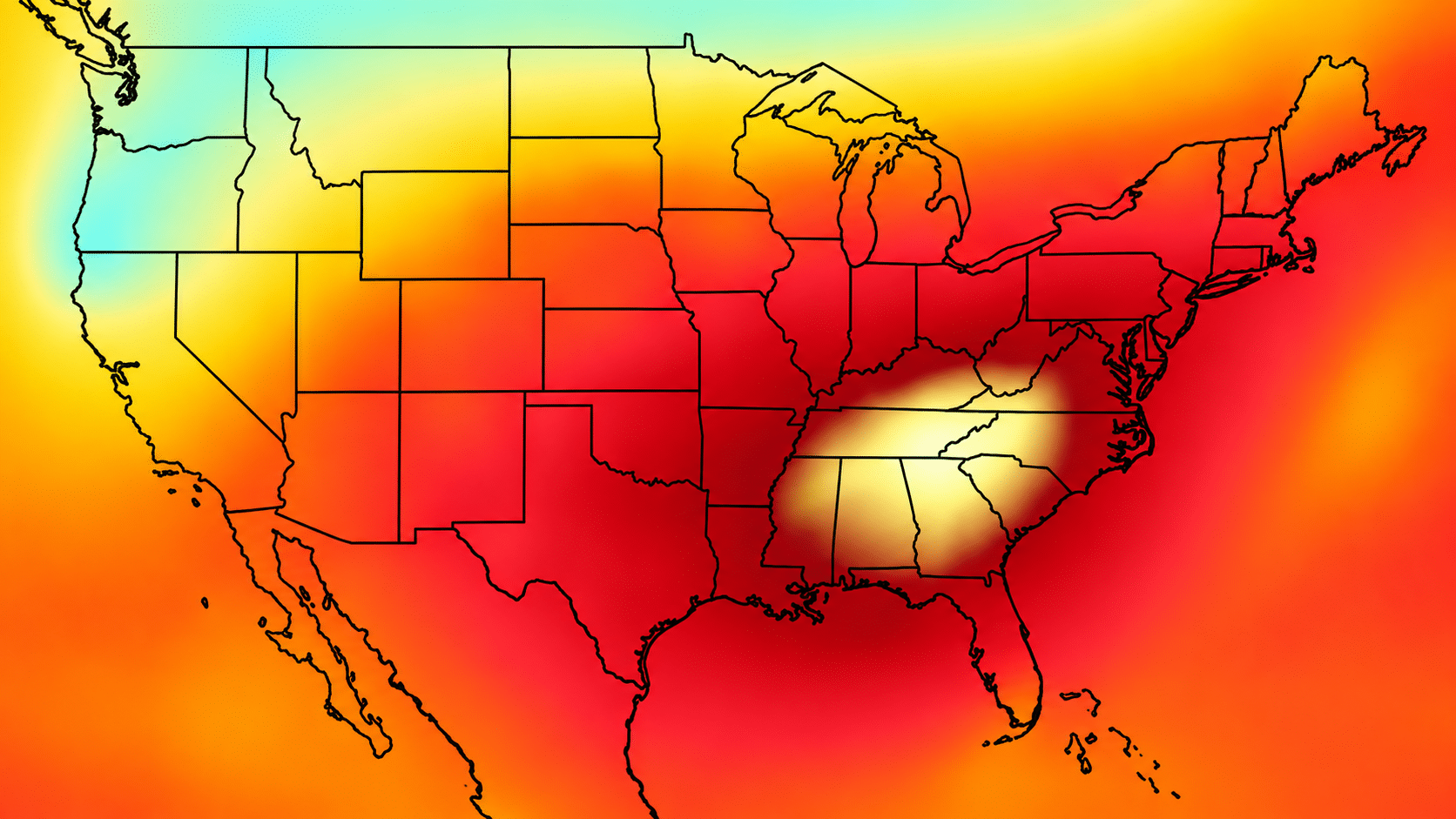
NASA’s September 17 report identifies a heat dome over the central and southern U.S. and reports that Nashville reached 100°F on September 15, 2026, breaking the city’s daily high-temperature record from 1927.[1]
A heat dome is a persistent high-pressure pattern that favors sinking air, fewer clouds, and prolonged warmth. It describes a regional weather pattern, not a measurement of your shingles or attic.
Weather context: September 2026. This is not a live weather-alert page. Check NWS Nashville for current conditions and warnings.
Heat above the roof. Airflow beneath it.
Three ways prolonged heat can affect your roofing system
Heat and UV exposure
Long-term exposure can contribute to material deterioration. An inspection looks for cracking, curling, and surface wear without assuming the heat dome caused every defect.[2]
Expansion and contraction
Materials respond as temperatures rise and fall. Repeated cycles, and especially rapid changes, can stress the roof. This is not proof that a particular shingle has failed.[2]
Your roof may need a correction, not a replacement.
Let Mr. GoodRoof document what is happening before you spend money on a fix.
Know which temperature you are reading
How hot can a roof get during extreme heat?
GAF describes dark asphalt-shingle roofs reaching about 150°F on a sunny summer day. That is an example, not a universal maximum or a temperature reading for your home.[2]
| Measurement | What it tells you | What it cannot establish |
|---|---|---|
| Outdoor air | The air temperature reported for a location. | The temperature of your sun-exposed shingles. |
| Roof surface | The temperature of the material being measured. | The attic air temperature or whether replacement is necessary. |
| Attic air | Conditions at the measurement point inside the attic. | Complete ventilation adequacy from one reading alone. |
Time of day, sunlight, wind, roof material, and measurement location matter. A surface-temperature reading should not be labeled an attic-air measurement.
Hot upstairs does not identify one cause
Could attic ventilation be part of the problem?
Yes. In a vented attic, outdoor air needs a clear entry path and a suitable exhaust path. Adding another vent without checking the intake can leave the real problem unresolved.[4]
Intake
Check lower-roof or soffit openings and whether insulation, missing baffles, or obstructions restrict them.
Exhaust
Review vent capacity and placement within each common attic area. Lomanco advises a coordinated exhaust type rather than mixing systems that draw from one another.[5]
The rest of the home
Air sealing and insulation limit heat transfer. An attic fan can pull conditioned air from the house when intake is blocked and the attic boundary is poorly sealed.[3]
We do not assume your air conditioner is working correctly or incorrectly. A complete comfort diagnosis may also require an HVAC or insulation professional.
You do not have to diagnose it yourself
When is a roof-and-attic check worth scheduling?
Comfort concerns
- The upstairs or bonus room stays uncomfortable.
- Cooling performance has changed noticeably.
- A vented attic has known blocked intake or altered vents.
Roof-condition concerns
- Shingles appear cracked, curled, or unusually worn.
- You see bare-looking patches or a change in surface condition.
- You are considering roof work without a ventilation assessment.
These observations are reasons to investigate, not a diagnosis of heat damage.
Stay off the roof and out of an excessively hot attic. Hot-weather roofing work requires precautions for both people and materials. GAF specifically cautions installers to avoid scuffing shingles in hot weather.[10]
What heat stress can look like
Real roof details worth checking during prolonged heat
Heat alone does not prove failure, but these are the kinds of roof details that deserve a closer look when a Nashville heat dome is pushing materials hard. Pipe boots can dry out and crack, shingle edges can lift or curl, and granule loss or scuffing can leave parts of the roof more exposed to UV and weather.

Pipe-boot wear and heat exposure
Rubber boots and sealants can dry out faster in prolonged heat. Cracking around penetrations is a common place to look for future leak risk.

Lifting or uneven shingles
Raised tabs or uneven courses can point to aging, adhesion loss, or other conditions that should be evaluated before the next storm.

Granule wear up close
Granule loss affects the roof’s protective surface. A close inspection helps separate cosmetic wear from more meaningful damage.

Curled or brittle shingles
Repeated heat cycles can contribute to drying and brittleness over time. That does not always mean replacement, but it is worth documenting.
Not sure whether what you see is normal aging or a real issue?
We can inspect the roof, document the details with photos, and explain whether the next step is repair, ventilation work, replacement planning, or no immediate roofing work.
Free roof & attic ventilation check
What will Mr. GoodRoof evaluate?
Our ventilation service evaluates the roof and attic as a system. Safe access and the home’s design determine what can be inspected during the visit.
Roof condition
Visible shingle wear, roof penetrations, flashing, existing repairs, and accessible decking conditions.
Attic configuration
Vented or unvented design, separate attic spaces, roof geometry, and signs of restricted airflow.
Ventilation capacity
Attic area, available intake, exhaust products, and the manufacturer’s Net Free Area ratings.
Findings and next steps
Photos and an explanation of whether roofing work, ventilation correction, another professional’s evaluation, or no immediate work makes sense.
Temperature or moisture readings may help when appropriate, but they are evidence within the evaluation, not a standalone pass-or-fail test.
“He investigated on top of our roof, inside the attic area, & the overall health of our roof related structures.”
Robert B. · Customer feedback on a roof evaluation

Ventilation details matter
We look at how intake and exhaust work together, not just whether a roof has a vent somewhere on it.

Roof-surface condition still has to be checked in person
From the ground, a roof can look fine. Up close, we can assess sealants, penetrations, shingle condition, and visible heat-related wear.
Repair. Restore. Replace.
What happens if the inspection finds a problem?
A targeted correction
A serviceable roof may need an intake correction, a vent repair, or a localized component repair. The scope follows the findings.
Restoration assessment
GoodShield may be considered for a qualifying roof after evaluation. It is not presented here as reflective cool roofing or a substitute for an appropriate ventilation system.
Replacement planning
If roof condition warrants replacement, compare materials, decking procedures, ventilation, and the complete installation scope.
A heat dome does not decide the scope. Our repair-versus-replacement guide explains the decision in more detail.
Considering a future roof replacement?
Cool roofs, radiant barriers, and ventilation do different jobs
A cool roof uses reflective surface properties to reduce solar heat absorption. A radiant barrier addresses radiant heat transfer within an assembly. Neither should be treated as a shortcut around the home’s insulation, moisture-control, or ventilation design.[7][11]
| Option | Its role | What to compare |
|---|---|---|
| Reflective roofing | Reduce absorbed solar energy. | Exact product and color, solar reflectance, and thermal emittance.[9] |
| Ventilation correction | Improve the intended air path in a vented attic. | Intake, exhaust, attic layout, and product capacity.[4] |
| Insulation and air sealing | Limit heat and air movement between the attic and living space. | The ceiling boundary, penetrations, and insulation continuity.[3] |
| Radiant barrier | Reduce a component of radiant heat transfer. | The full assembly, installation method, climate, and existing insulation.[11] |
Berkeley Lab illustrates that a clean white reflective roof can be roughly 55°F cooler than a gray roof under specified summer conditions. That does not mean every reflective shingle makes an attic 55°F cooler. Cool-colored products can have different results.[7]
For a Nashville home, compare the potential cooling benefit with winter heating effects, appearance, roof condition, and the cost of changing a roof that may still be serviceable.[8] Impact resistance, algae protection, and solar reflectance are different product characteristics; do not treat a Class 4 or rubberized-asphalt label as a cool-roof rating.
Roof heat questions
What Nashville homeowners are asking
Does one heat wave mean my roof needs replacement?
No. Roof condition and repairability determine the recommendation. Heat exposure is one factor to investigate, not an automatic reason for a new roof.
What is thermal shock, and is it the same as normal daily heating?
Normal temperature cycles involve gradual expansion and contraction. Thermal shock describes a more rapid temperature change. GAF identifies rapid cooling after a hot day as a potential roof stressor; the term does not establish damage on a particular home.[2]
Will adding more vents fix a hot upstairs?
Not necessarily. First identify the attic design and calculate the intake and exhaust capacity. More exhaust is not a replacement for adequate intake.[4]
Does a reflective roof mean I can remove attic ventilation?
No. Reflectivity is a surface property, while attic ventilation is part of the assembly design. Intentionally unvented attics have their own insulation and moisture-control requirements.[6][9]
Can ventilation correction undo existing shingle damage?
It should not be presented as reversing cracks or restoring missing granules. Existing damage needs its own repairability assessment, even when airflow is also corrected.
Will my cooling bill drop by a specific percentage?
No percentage is promised. Results depend on the home, the work performed, weather, insulation, air sealing, and HVAC conditions. Research on another roof assembly is not a savings estimate for your property.[8][11]
Can I have ventilation checked without agreeing to a new roof?
Yes. Request the free roof-and-attic check. We explain the findings and proposed work before you decide whether to proceed.
Where can I request a check?
Mr. GoodRoof serves Nashville and surrounding Middle Tennessee communities, including Franklin, Brentwood, Hendersonville, and Murfreesboro. Request an inspection so the team can confirm access and scheduling for your address.
Nashville & surrounding communities
A roof-and-attic check for your home, not a one-size-fits-all answer
Whether your home is in Nashville, Brentwood, Franklin, Hendersonville, or Murfreesboro, the evaluation starts with its actual roof condition and attic design. A city name or weather map cannot tell us how your home is performing.
Explore Mr. GoodRoof roofing services or request a visit for your address. Roof and attic access may be adjusted for heat and other safety conditions.
Start with the roof you have
Hot upstairs? Concerned about your shingles? Let’s check both.
Get photos, a clear explanation, and a recommendation based on your home. The answer may be a ventilation correction, a targeted repair, replacement planning, or no immediate roofing work.
The inspection is free. Any recommended work is quoted separately. Appointments depend on service area, availability, weather, and safe access.
Sources & context
Roof heat and ventilation references
- NASA Earth Observatory: September 2026 heat dome and Nashville temperature record
- GAF: roof heat, UV exposure, and thermal shock
- ENERGY STAR: attic ventilation, insulation, air sealing, and attic-fan cautions
- Lomanco: attic measurements and Net Free Area
- Lomanco: coordinated intake and exhaust systems
- Building America Solution Center: intentionally unvented attic assemblies
- Lawrence Berkeley National Laboratory: how cool roofs work
- U.S. EPA: cool roofs, energy tradeoffs, and building efficiency
- Cool Roof Rating Council: solar reflectance and thermal emittance
- GAF: precautions for shingle installation in hot weather
- ORNL-hosted research: roof and attic strategies under specific modeled conditions
Weather context is dated September 2026. Research examples describe their own materials, conditions, and assumptions; they are not property-specific temperature, energy-savings, or roof-lifespan guarantees. Individual recommendations require an evaluation.