AI Roof Scans & Insurance Readiness
Are Insurance Companies Using Aerial Images of My Roof?
Yes. Insurance carriers may use aerial imagery, roof age data, satellite or drone photos, and AI-assisted tools to review roof condition for underwriting, renewal, pricing, or claim-related decisions.
Those tools can be useful, but they cannot replace a current, on-site roof inspection from someone who can evaluate the actual roof system.

Quick Answer
Can an insurance company look at my roof from aerial images?
Yes. Some insurance carriers use aerial imagery and AI-assisted tools to help evaluate roof age, roof condition, underwriting risk, renewal questions, and claim information. Aerial images can show visible roof features, but they may not show flashing performance, pipe boots, valleys, attic ventilation, leaks, shingle flexibility, or whether a visible mark is cosmetic staining, debris, or actual roof damage. A documented roof inspection gives Nashville-area homeowners current photos and a professional roofing opinion before they respond to a roof notice, file a claim, or replace the roof.
Why It Matters
Why would an insurance company use aerial images of a roof?
Insurance companies may use aerial imagery and data tools because they can review many properties quickly. For homeowners, the concern is not that the technology exists. The concern is whether the image is current, clear, accurate, and supported by on-site roof documentation.
Carriers may review roof age and visible roof condition when deciding whether to issue or renew a policy.
A homeowner may receive a letter asking for roof repair, replacement, or updated roof-condition documentation.
Roof age, condition, tree coverage, debris, or visible exterior concerns may influence how a property is reviewed.
After a storm, imagery may help carriers compare visible conditions before and after the event, but it should not replace proper investigation.
What Images Can Miss
What can an aerial roof image miss?
An aerial roof image is a view from above. It can help identify visible patterns, but it does not inspect the roof the way a trained roofer does from the roof surface and attic access points.
- Flashing performance around chimneys, walls, and roof transitions
- Pipe boots, roof vents, valleys, ridge caps, drip edge, and gutter tie-ins
- Lifted, creased, brittle, or storm-damaged shingles that require close inspection
- Attic ventilation issues, moisture concerns, or heat-related roof system problems
- Whether dark streaks are cosmetic staining, algae, shadows, debris, or roof deterioration
- Recent repairs or replacement work completed after the image was captured
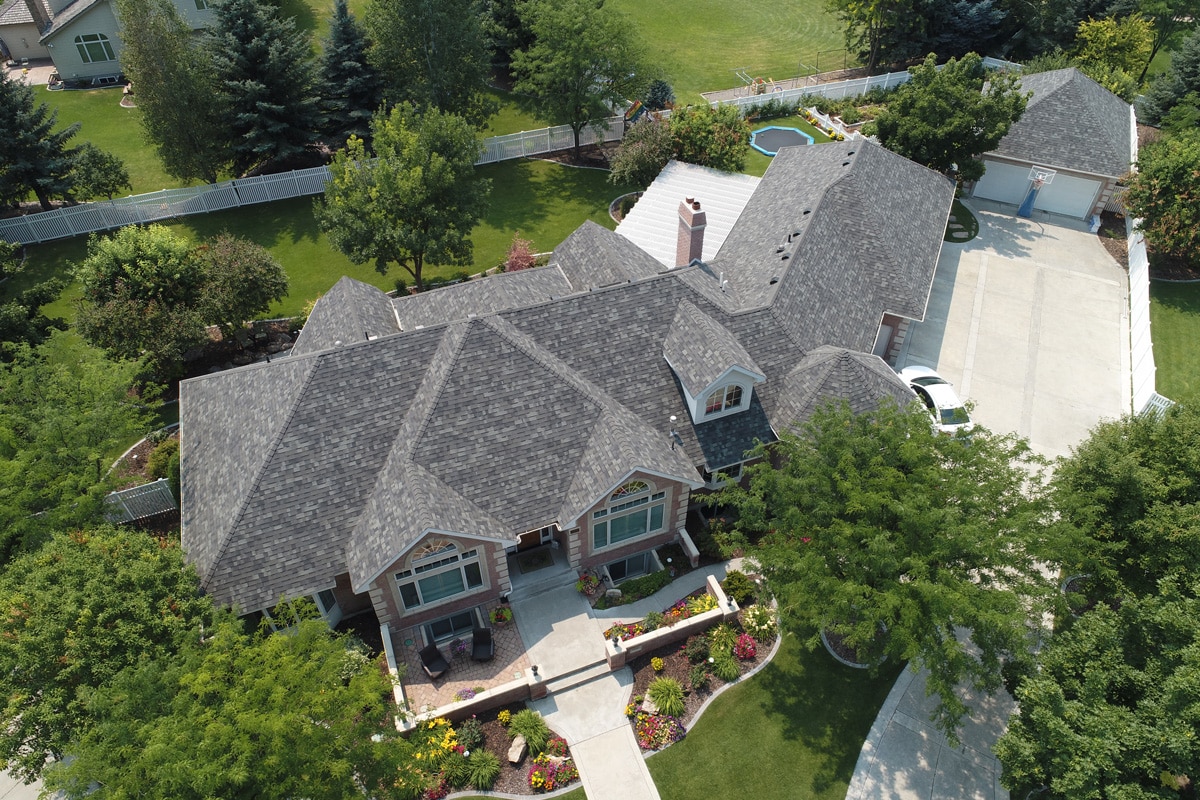
Aerial Image vs. Inspection
How is an on-site roof inspection different from an aerial image?
Aerial image or AI roof scan
What it can show: Visible roof shape, surface patterns, tree coverage, debris, discoloration, and sometimes obvious missing materials.
What it may miss: Current roof details, flashing performance, pipe boots, attic conditions, leak sources, repair history, and whether a mark is cosmetic or material damage.
Documented on-site roof inspection
What it can show: Current photos, close-up roof conditions, repair concerns, storm indicators, roofing scope, and repair-or-replacement recommendations.
Why it matters: It gives the homeowner a current record they can keep, compare, and share as needed when making a roof decision.
| Review Type | What It Can Show | What It May Miss | Best Use for Homeowners |
|---|---|---|---|
| Aerial image or AI-assisted roof scan | Visible roof shape, surface patterns, tree coverage, debris, discoloration, and sometimes obvious missing materials. | Flashing details, pipe boots, attic ventilation, active leak sources, roof repair history, shingle condition up close, and recent repairs completed after the image date. | Useful as one reference point, but not enough to understand the full roof system. |
| Documented on-site roof inspection | Current photos, close-up roof conditions, repair concerns, storm indicators, roofing scope, and repair-or-replacement recommendations. | No inspection can determine policy coverage. Coverage decisions belong to the insurance carrier based on the policy. | Best first step before responding to a roof notice, filing a claim, or replacing the roof. |
Roof Letter or Renewal Concern
What should I do if insurance says my roof is too old or in poor condition?
Do not panic and do not replace the roof without understanding what the concern is. Start by gathering records and getting current roof documentation.
-
Read the letter carefully.
Look for the reason given, any deadline, and what the carrier is asking you to provide.
-
Gather your roof records.
Keep roof replacement dates, invoices, permits, warranty documents, repair receipts, and past inspection photos.
-
Schedule a documented roof inspection.
Get current photos and a roofing recommendation so you know whether the issue appears repairable, maintenance-related, storm-related, or replacement-level.
-
Talk to the right party for coverage questions.
Your insurance carrier or agent can explain policy requirements. For claim disputes or legal questions, speak with a licensed public adjuster or attorney.

How Mr. GoodRoof Helps
How does Mr. GoodRoof document roof condition?
Mr. GoodRoof gives Nashville and Middle Tennessee homeowners a current record of visible roof conditions, repair concerns, and replacement-level issues. The goal is simple: make the roofing facts clear before a homeowner decides what to do next.
We look at shingles, flashing, pipe boots, valleys, vents, ridge caps, gutters, and visible roof system details.
We document visible roof concerns with photos the homeowner can keep for their records.
We explain whether the issue appears repairable or whether replacement may be the more appropriate roofing recommendation.
We provide a professional roofing estimate the homeowner can keep and share as needed.
We can explain materials, methods, visible damage, and roofing scope as your contractor.
If you choose Mr. GoodRoof, our team can complete approved repair or replacement work.
Plain-English Guidance
What should Nashville homeowners remember about AI roof scans?
They may help carriers identify visible property features and review risk faster.
They are not a full roofing inspection and may not show the current condition of the roof.
If a repair or replacement happened after the image was captured, the image may not reflect today’s roof.
Recent photos, roof records, and an on-site inspection can help homeowners make better next-step decisions.
This page is educational and does not determine insurance coverage. Always review your policy and speak with your insurance carrier or agent for policy-specific questions.
Related Resources
Keep learning before you make a roof decision
Insurance Guidance
Roofing Services
FAQs
Aerial roof image and insurance FAQs
Are insurance companies allowed to use aerial images of my roof?
Insurance companies may use aerial imagery, satellite imagery, drone photos, third-party property data, or AI-assisted tools as part of certain underwriting, renewal, pricing, or claim-related workflows. How that information is used depends on the carrier, policy, state rules, and situation.
Can an aerial image prove my roof needs to be replaced?
An aerial image may show visible roof concerns, but it does not inspect the full roof system. A current on-site roof inspection can evaluate close-up shingle condition, flashing, pipe boots, vents, valleys, gutters, attic ventilation, and repair-or-replacement options.
What if the aerial image is old?
Old imagery may not show recent repairs, roof replacement, storm damage, or maintenance work. Homeowners should keep roof records and current inspection photos so they can show what the roof looks like today.
What should I do if I receive an insurance roof letter?
Read the letter carefully, gather roof records, and schedule a documented roof inspection. Mr. GoodRoof can inspect the roof, photograph visible conditions, and explain whether the roof appears repairable or may need replacement.
Can Mr. GoodRoof challenge the insurance company’s image for me?
Mr. GoodRoof can document the roof and provide roofing-scope information, but we do not represent or negotiate on your behalf with the insurance carrier. If you need help with a claim dispute or policy interpretation, speak with your carrier, a licensed public adjuster, or an attorney.
Should I replace my roof because insurance used an aerial image?
Not without understanding the roof’s actual condition. A documented inspection can help determine whether the concern appears repairable, maintenance-related, storm-related, or replacement-level.
What records should I keep for my roof?
Keep roof replacement invoices, repair receipts, warranties, permits if available, inspection reports, before-and-after photos, and any written roofing estimates. These records can help show roof age, roof work completed, and current roof condition.
Source Notes
Sources used for this homeowner guide
NAIC: AI in insurance
The National Association of Insurance Commissioners reports that 70% of responding home insurers use, plan to use, or plan to explore AI/ML models in their operations.
Pennsylvania aerial imagery guidance
The Pennsylvania Insurance Department has reminded insurers to conduct a physical inspection to confirm roof damage supposedly evidenced by aerial imagery.
Louisiana aerial image limit
Louisiana law limits sole reliance on aerial images older than 24 months when identifying the roof condition used as the basis for homeowners insurance cancellation or nonrenewal.
Before an image decides the conversation, get the roof documented.
If you received a roof-related insurance letter, have an older roof, or want a clearer record before storm season, Mr. GoodRoof can inspect your roof, document current conditions, and explain your repair or replacement options.