Chimney Flashing Repair

in Nashville TN

Quick Links

Roof Replacement

Roofing System

If your roof is leaking around your chimney

It is almost always a flashing issue.

This is one of the most common problems we see across Nashville homes. Water runs down your roof, hits the chimney, and if that area is not sealed correctly, it works its way inside.

At Mr. GoodRoof, we specialize in chimney flashing repair to stop leaks at the source, not just temporarily cover them up.

Flashing on a roof

Why Chimney Leaks Happen

Your chimney creates a break in your roof system, and that makes it one of the most vulnerable areas for water intrusion.

From what we see in the field, chimney leaks are typically caused by:

  • Cracked or deteriorated flashing
  • Improper step flashing installation
  • Failed sealant from past repairs
  • Water pooling behind the chimney
  • Storm damage and shifting materials

Many of these issues come from shortcuts taken during previous roofing work.

Flashing on a roof on a roof

Signs You Need Chimney Flashing Repair
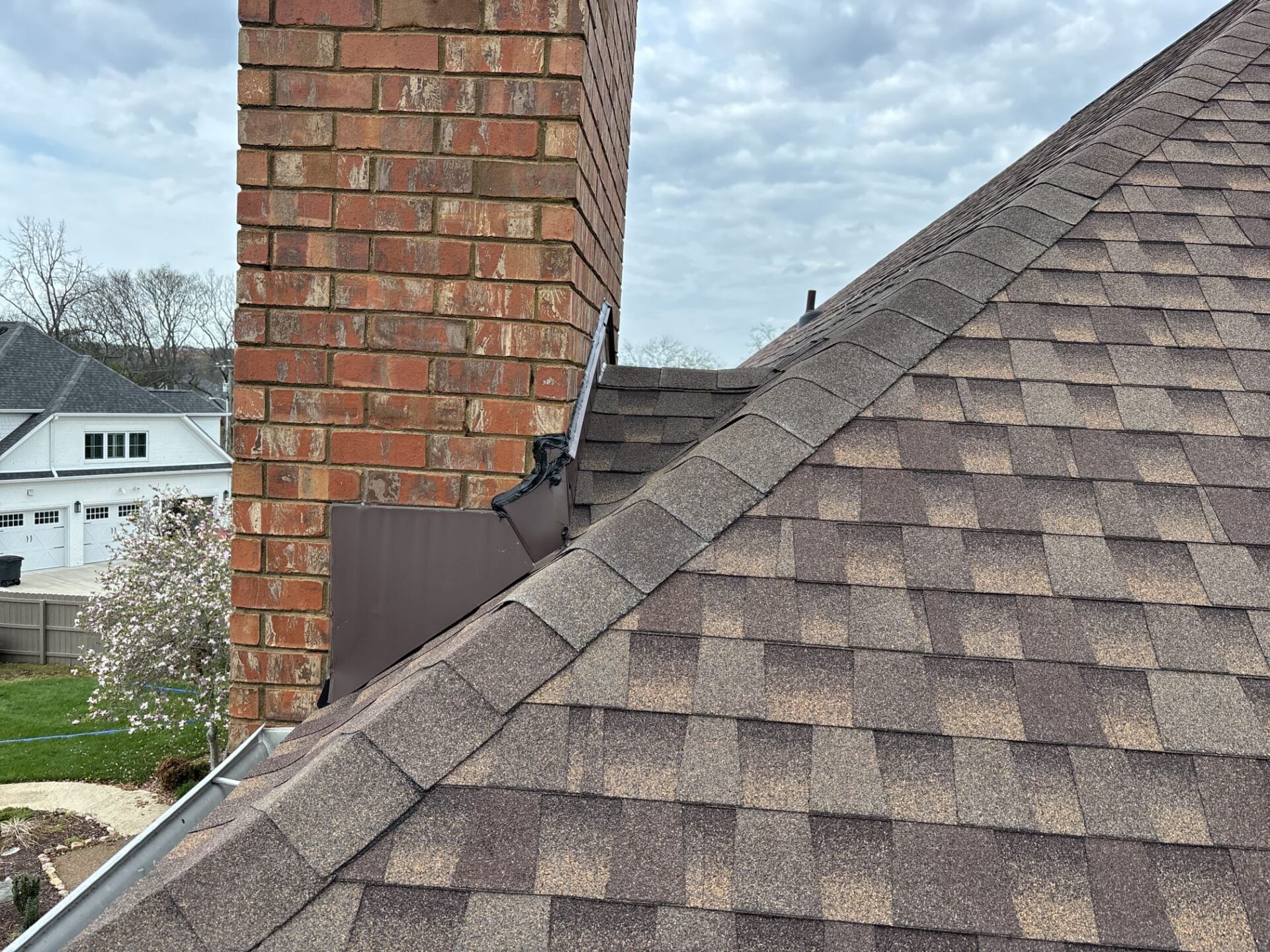
Chimney flashing on a roof installed by mr goodroof
  • Water stains near your chimney
  • Leaks during heavy rain or storms
  • Moisture or discoloration on ceilings
  • Previous repairs that did not solve the problem

If you are seeing any of these, the issue will only get worse over time.

Why Many Chimney Repairs Fail

We are often called out after another contractor has already tried to fix the problem.

In most cases, the issue comes down to temporary fixes like:

  • Applying caulk instead of repairing flashing
  • Patching one area without addressing the full system
  • Ignoring how water flows around the chimney

These approaches may stop the leak temporarily, but they do not solve the underlying problem.
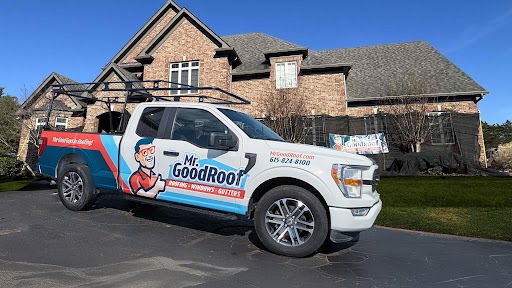
A mr goodroof truck in front of a home

How We Diagnose Chimney Flashing Issues

We do not guess where the leak is coming from. We find it.

Our team physically inspects the roof and chimney from every angle, including:

  • Front apron flashing
  • Step flashing along both sides
  • Counter flashing attached to the chimney
  • Back side where water tends to collect

From our experience, water often travels before it shows up inside your home. That is why a full inspection is critical.

Our Chimney Flashing Repair Process

  • Identify the true source of the leak
  • Remove compromised materials if needed
  • Repair or replace damaged flashing sections
  • Reinforce key transition areas
  • Ensure proper water flow away from the chimney

Our goal is to fix the issue correctly so you are not dealing with the same problem again.
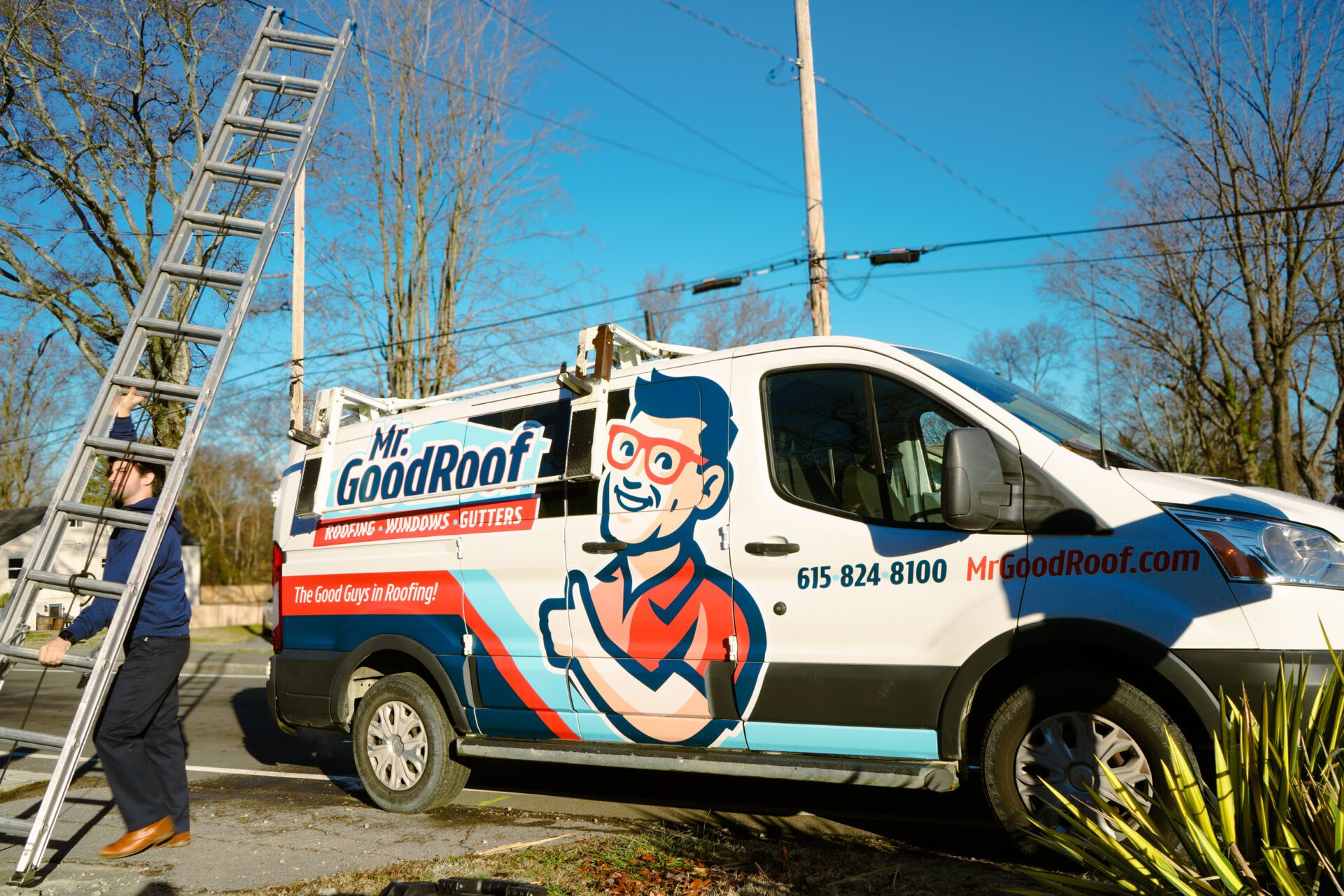
A mr goodroof van in nashville tn
A mr goodroof technician on a roof in nashville

Repair vs Replacement – What Do You Actually Need?

Not every chimney issue requires full flashing replacement.

If the problem is localized, repair is often the best option.

If the flashing system is failing across multiple areas or was installed incorrectly from the start, replacement may be recommended.

We will walk you through both options so you can make the right decision.

Built for Nashville Weather

Homes in Nashville deal with heavy rain, strong storms, and wind-driven water.

The chimney area takes a direct hit during these conditions, which is why proper flashing repair is critical.

Your roof should be built to handle real-world weather, not just basic conditions.
A mr goodroof yard sign

Why Nashville Homeowners Choose Mr. GoodRoof

  • We physically inspect every roof
  • No subcontractors – all in-house crews
  • We fix the root problem, not just the symptom
  • We understand how water actually moves across a roof
  • 20+ years serving Middle Tennessee

We are not just stopping a leak. We are solving the problem the right way.

Frequently Asked Questions

“Chimney flashing” isn’t one piece — it’s a **four-component system** that seals the joint between your chimney and your roof. **Apron flashing** runs across the downhill (front) side. **Step flashing** is layered between shingle courses along both sides of the chimney. **Counter-flashing** is bent metal embedded into the chimney’s mortar joints that overlaps the step flashing below it. And on larger chimneys, a **cricket** (also called a saddle) sits on the upslope side to divert water around the chimney rather than letting it pool. A leak almost always means **one of these four** has failed — not “the flashing” generally.
Heavy rain combined with wind is the stress test that exposes flashing weaknesses you don’t see in normal weather. During a typical drizzle, water flows predictably down the roof and shingles do most of the work. In a Nashville thunderstorm, **wind-driven rain forces water sideways and even uphill** — under shingles, behind counter-flashing, into hairline mortar cracks. Aging sealant, poor overlaps, or a missing cricket all become active leak paths. If your chimney only leaks in storms, the flashing is failing under stress conditions; the right fix isn’t more sealant, it’s identifying which component of the system is letting water through.
If your chimney is **wider than 30 inches** along the upslope side, the answer is almost certainly yes — and most building codes now require it. A **cricket** (also called a saddle) is a small triangular framed structure built behind the chimney that splits water flow and channels it around to either side, rather than letting it dam up against the chimney’s back wall. Without a cricket, water and debris (leaves, ice, snow) collect against the masonry, accelerate flashing failure, and saturate the mortar joints. We install crickets routinely in Nashville and Middle Tennessee — it’s one of the highest-leverage upgrades a chimney can receive.
These often get confused but solve different problems. **Chimney flashing repair** addresses the metal that seals where the chimney meets the roof. **Repointing (or tuckpointing)** is masonry work — grinding out and replacing failed mortar between bricks, including the joints where counter-flashing is embedded. A leak can come from **either or both**. We frequently inspect chimneys where the metal flashing is fine but the mortar joints have crumbled, allowing water to bypass the flashing entirely. Mr. GoodRoof can identify when masonry work is needed and coordinate it alongside the flashing repair so the chimney is sealed as a complete system.
Counter-flashing is the **upper layer** of a chimney flashing system, and it’s what makes the seal weather-tight. The top edge of the metal is bent and embedded into a horizontal cut in the chimney’s mortar joint — called a **reglet** — and locked in place with sealant or lead wedges. The bottom of the counter-flashing then folds down over the step flashing below. Water that hits the chimney runs down the masonry, hits the counter-flashing, and is directed out onto the step flashing and away from the joint. When the mortar fails or the counter-flashing comes loose from the reglet, water bypasses the entire system.
Because **most chimney “repairs” are caulk jobs**, not flashing repairs. We’re called out constantly to homes where someone — a previous contractor, a handyman, or the homeowner — has applied a thick bead of caulk over the leak point. Caulk hides the symptom for a few months, then cracks under UV exposure and freeze-thaw cycles. The leak returns, often worse, because moisture has been trapped against the wood deck and masonry the entire time. A real repair lifts the flashing, identifies the actual failure point (mortar, metal, or both), and rebuilds the seal correctly so it lasts.
When the repair is done correctly — meaning the actual failure point is identified and addressed, not just sealed over — a chimney flashing repair can last **the remaining life of your roof**, often 10 to 20 years or more. Lead and copper counter-flashing can last decades longer than that when paired with sound mortar. The repairs that fail prematurely are the ones that relied on caulk, skipped masonry work that needed doing, or addressed only one of the four flashing components. Mr. GoodRoof’s chimney flashing repairs are backed by a written workmanship warranty.
Yes — and most homeowners don’t realize the **chimney crown** (the concrete or mortar cap at the top of the chimney) is often the actual source of what looks like a flashing leak. When the crown cracks or deteriorates, water enters from the top, runs down inside the chimney walls, and shows up as ceiling stains that mimic a flashing failure. As part of every chimney flashing inspection, our team checks the crown, the mortar joints along the chimney’s full height, and the cap or chase cover. Fixing the flashing without addressing a failed crown means the leak will keep coming back.

Schedule Your Chimney Flashing Repair in Nashville

If your chimney is leaking, it is only a matter of time before it causes more damage inside your home.

Mr. GoodRoof provides detailed inspections and chimney flashing repairs designed to fix the issue the right way.
Contact Us

Schedule your inspection today, and get a free estimate.

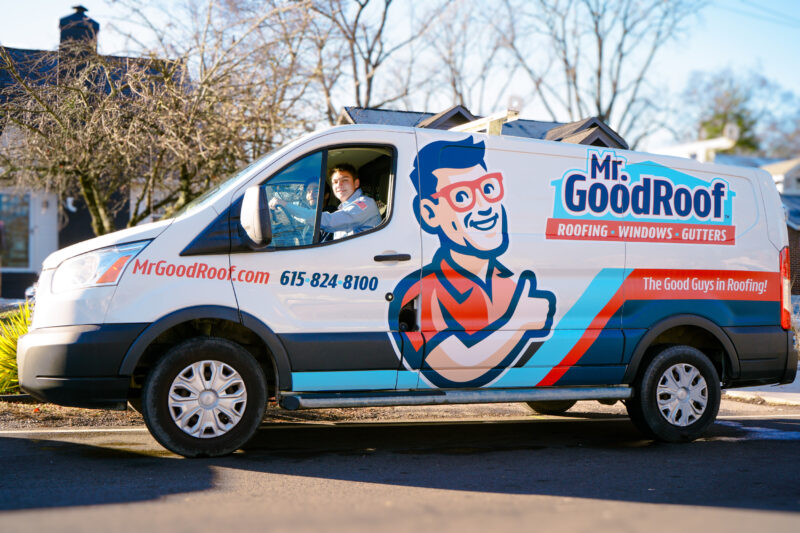
Two men in a white van that is covered in graphics for Mr Good Roof.

Call for immediate assistance.

⚠️Emergency Repairs? We’re on it.
📅 Same-Day Appointments Available
✅ Free Inspection