Quick Answer
What Type of Roof Vent Is Best for My Home?
The best roof vent for your home depends on your attic size, roof design, ridge length, soffit intake, existing exhaust vents, and the amount of Net Free Area your attic needs. Ridge vents, box vents, turbine vents, powered vents, solar vents, gable vents, and soffit vents can all work well in the right situation — but no single vent is right for every roof.
At Mr. GoodRoof, we do not guess and we do not simply add more vents because the attic feels hot. We inspect the full ventilation system, calculate airflow needs, check intake and exhaust balance, look for blocked soffits, and recommend the vent type that fits your home.
If your upstairs rooms are hot, your attic smells musty, your shingles are aging early, or you are replacing your roof, a ventilation inspection can help determine whether your home needs better intake, better exhaust, a different vent type, or no ventilation work at all.
Reviewed by: Mr. GoodRoof Ventilation Team
Last updated:
Best for: homeowners comparing ridge vents, box vents, turbine vents, power vents, solar vents, soffit vents, gable vents, and attic ventilation options.
Service area: Nashville, Hendersonville, Franklin, Brentwood, Gallatin, Mt. Juliet, Murfreesboro, Spring Hill, Smyrna, Clarksville, Columbia, Dickson, and surrounding Middle Tennessee communities.
Not Sure Which Vent Your Roof Needs?
You should not have to diagnose attic ventilation on your own. Mr. GoodRoof can inspect your attic airflow, check soffit intake, review existing vents, and explain whether your home needs ridge vents, box vents, turbine vents, powered ventilation, soffit correction, or a different solution.
Calculated, Not Guessed
The Right Roof Vent Depends on the Home
A ventilation system is not just a product choice. It is an airflow design. The right answer depends on how air enters the attic, how air exits the attic, and whether the amount of intake and exhaust is balanced for your roof.
Attic Size
Ventilation needs are based on the enclosed attic area, not just how many vents are already on the roof.
Intake Airflow
Soffit vents bring cooler outside air into the attic. If intake is blocked, exhaust vents cannot perform correctly.
Exhaust Capacity
Ridge vents, box vents, turbines, powered vents, and gable vents release hot, humid attic air when they are properly matched to the intake side.
Roof Design
Ridge length, roof pitch, hip and valley layout, attic configuration, and existing vent placement all affect which vent type makes sense.
Learn more about Mr. GoodRoof roof and attic ventilation services →

Roof Vent Options
Types of Roof Vents Mr. GoodRoof Installs and Evaluates
Ridge Vents
Best for: long, continuous ridgelines
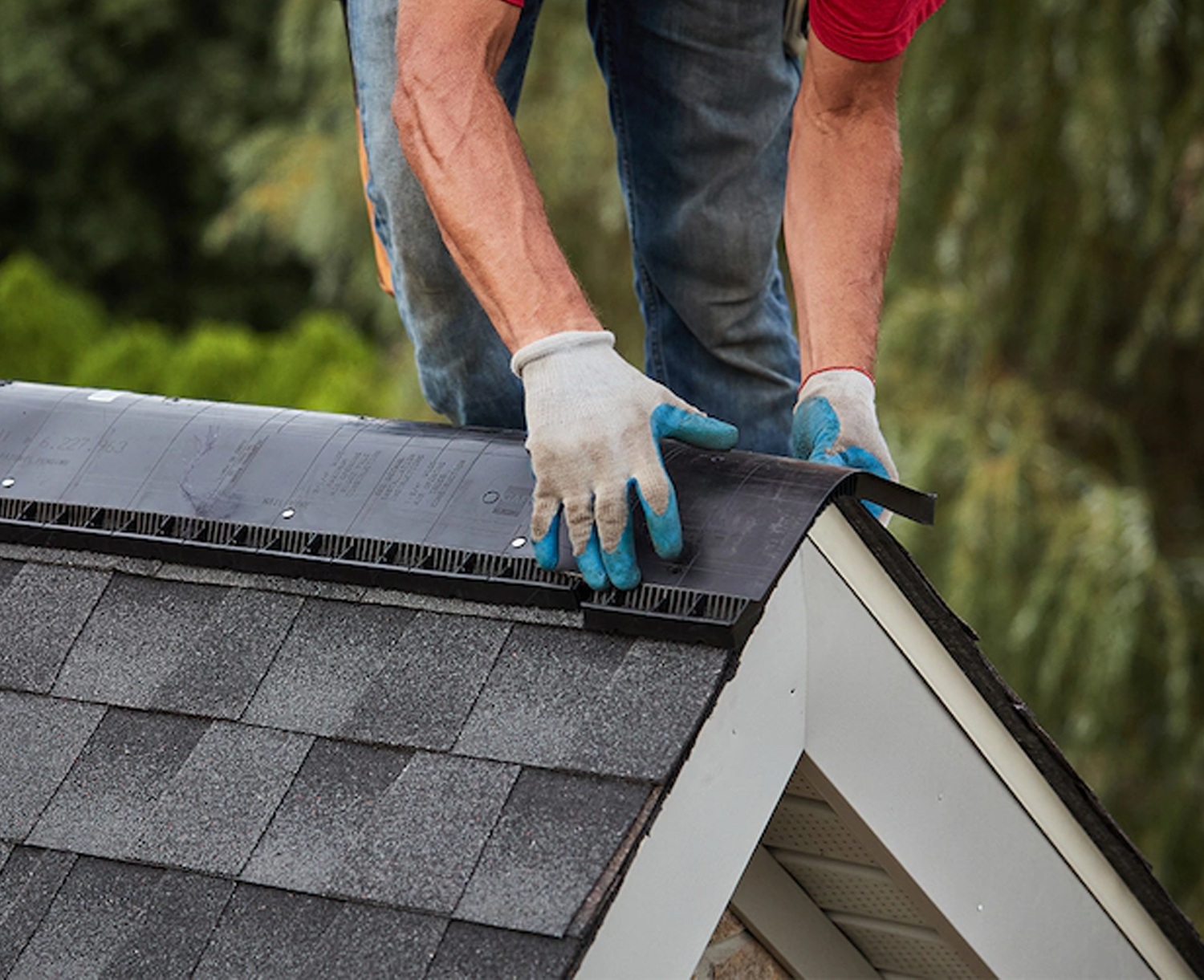
Ridge vents run along the peak of the roof and allow warm attic air to escape evenly along the roofline. They work best when the roof has enough ridge length and clear soffit intake.
Watch-out: Ridge vents are not always the best answer for short ridges, complex roofs, or homes with blocked intake.
Learn about ridge vents →Box Vents
Best for: hip roofs and complex rooflines
Box vents are static exhaust vents installed through the roof deck. They can be a good option when ridge length is limited or the roof design does not support a continuous ridge vent.
Watch-out: Quantity, placement, and intake balance matter. Too few box vents may not move enough air.
Learn about box vents →Turbine Vents
Best for: larger attics or stronger exhaust needs
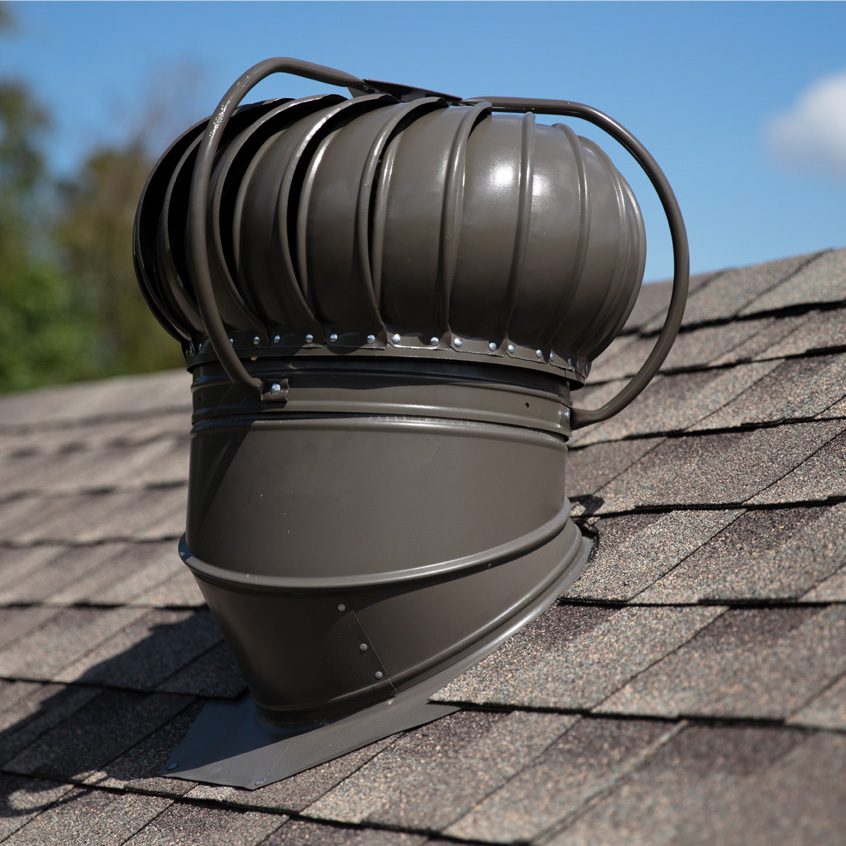
Turbine vents use wind movement to help pull hot air from the attic. They can be helpful when a passive exhaust system needs more pull and the attic has enough intake airflow.
Watch-out: Turbines have moving parts and still depend on proper intake. They are not a fix for blocked soffits.
Learn about turbine vents →Soffit Vents
Best for: intake airflow on most vented attic systems
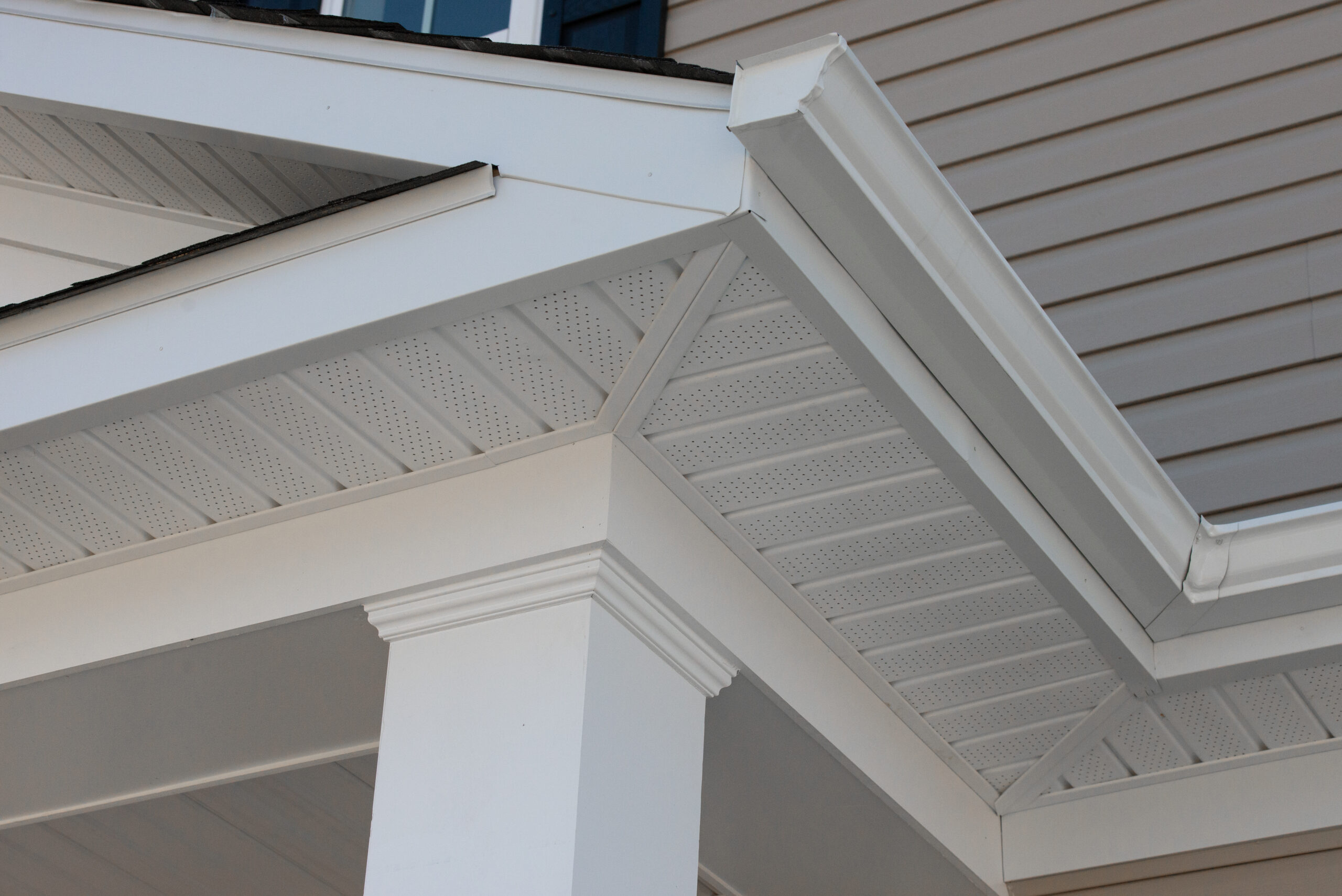
Soffit vents are installed under the eaves and bring outside air into the attic. They are the intake side of most balanced ventilation systems.
Watch-out: Soffit vents are often blocked by insulation, paint, debris, missing baffles, or soffit/fascia damage.
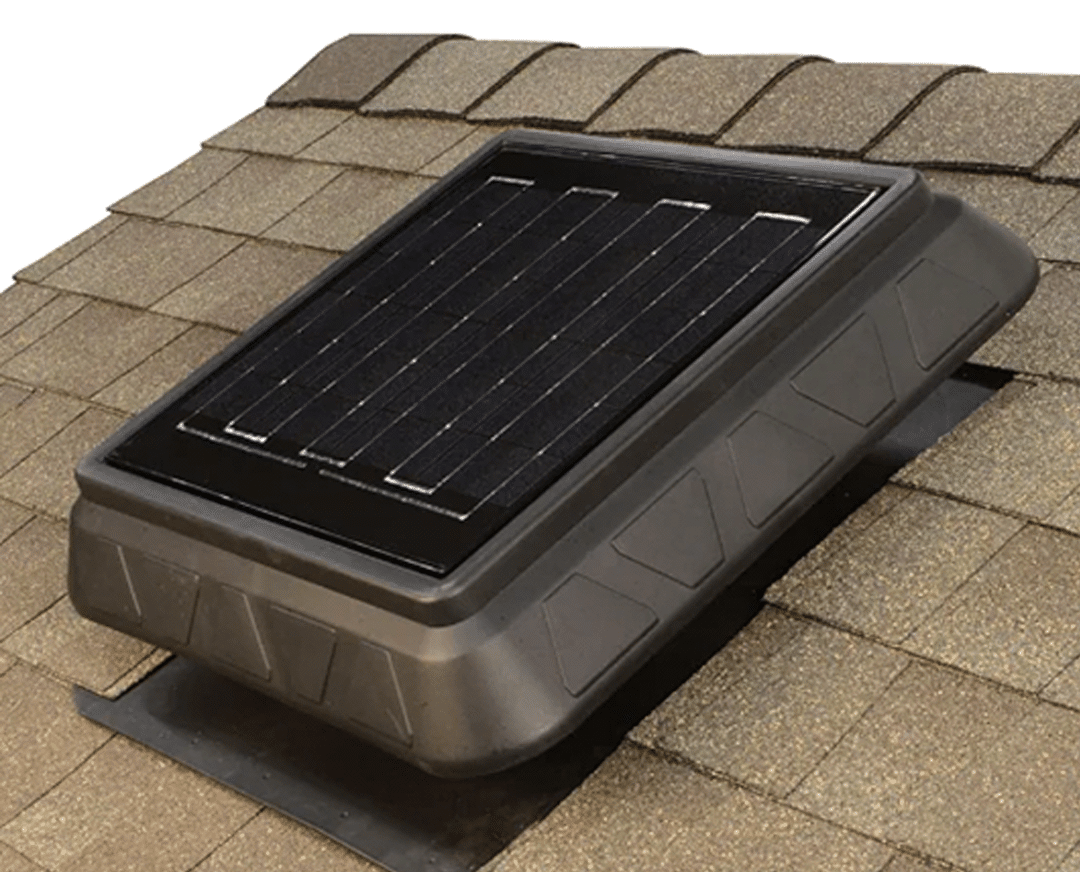
Learn about soffit vents →Powered or Solar Vents
Best for: specific high-heat or moisture situations
Powered and solar vents use fans to pull hot or humid air from the attic. Some include thermostats or humidistats that turn the fan on when conditions call for it.
Watch-out: Powered vents must be designed carefully. If intake is poor, a powered vent may pull conditioned air from the home instead of solving the attic airflow problem.
Ask about powered vents →Gable and Cupola Vents
Best for: supplemental airflow on some homes
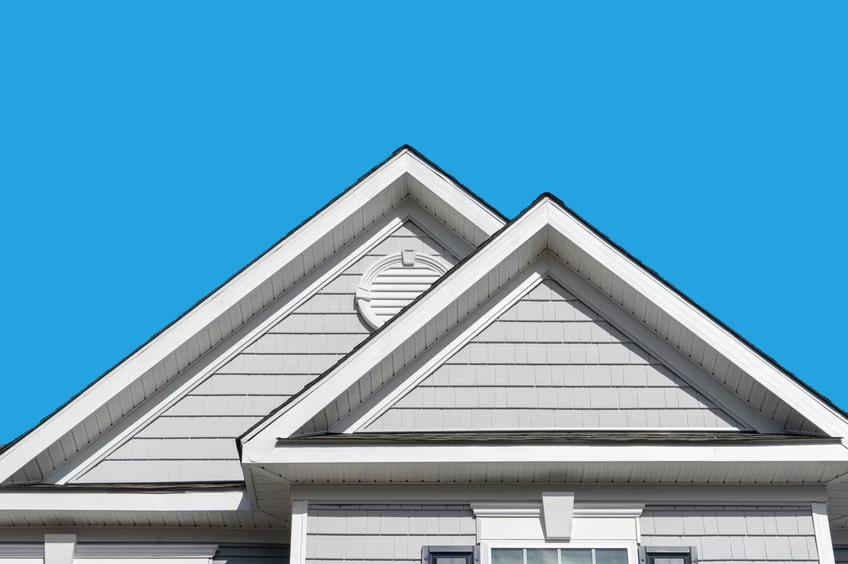
Gable and cupola vents can support attic airflow on certain roof designs, but they are not always a complete ventilation solution by themselves.
Watch-out: These vents need to be evaluated with the full system so they do not interfere with intake and exhaust movement.
Schedule a ventilation inspection →Quick Comparison
Which Roof Vent Fits Your Home?
This table gives general guidance. The right answer still depends on your attic size, roof layout, intake airflow, exhaust capacity, and whether existing vents are helping or fighting each other.
| Vent Type | Best Fit | Watch-Out |
|---|---|---|
| Ridge Vents | Long, continuous ridgelines with clear soffit intake | Not ideal when ridge length is limited or intake is blocked |
| Box Vents | Hip roofs, complex rooflines, or limited ridge area | Quantity and placement are critical |
| Turbine Vents | Larger attics or homes where passive systems fall short | Need adequate intake and occasional maintenance |
| Soffit Vents | Intake airflow for most balanced attic ventilation systems | Often blocked by insulation, paint, debris, or damaged soffit/fascia |
| Powered / Solar Vents | Specific high-heat or moisture situations | Can pull conditioned air from the home if intake and air sealing are wrong |
| Gable / Cupola Vents | Supplemental airflow on some home designs | Usually not a complete solution by themselves |
How Roof Ventilation Works
Your Roof Needs Intake and Exhaust
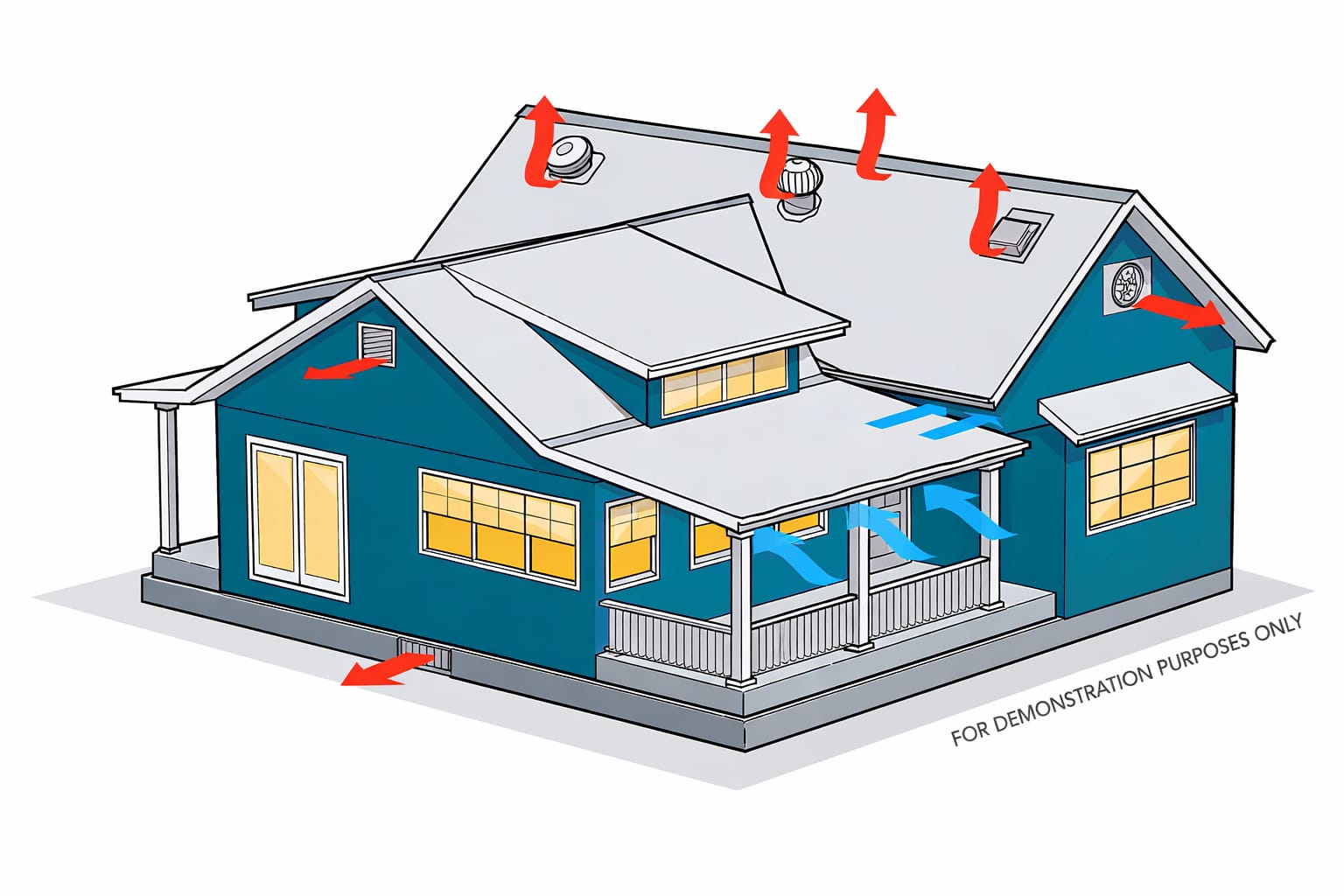
A properly ventilated attic works like a breathing system. Cooler outside air enters through the intake side, usually at the soffits, and hot, humid air exits through the exhaust side near the upper part of the roof.
Intake: Cooler Air In
Soffit vents under the eaves bring outside air into the attic. If soffit vents are missing, painted over, blocked by insulation, or covered by debris, the system may not be able to breathe.
Exhaust: Hot Air Out
Ridge vents, box vents, turbine vents, powered vents, gable vents, or cupola vents allow hot and humid attic air to leave the home when the exhaust system is designed correctly.
The Critical Point
More exhaust vents do not fix poor ventilation if the intake side is blocked. Mr. GoodRoof checks both sides before recommending a vent type.

Signs You May Need a Ventilation Inspection
Your Roof May Be Telling You the Attic Cannot Breathe
Ventilation problems often start inside the attic where homeowners cannot see them. By the time you notice comfort issues or roof wear, the system may already be under stress.
Not sure what is happening? Schedule a free roof and ventilation inspection →
The Mr. GoodRoof Way
What We Check Before Recommending a Roof Vent
A good ventilation recommendation should leave you with answers, not pressure. Mr. GoodRoof inspects the full airflow system and explains what we find in plain English.
Calculate the Need
We look at attic square footage, roof layout, ridge length, and Net Free Area so the recommendation is based on airflow — not guesswork.
Check Intake
We inspect soffit vents, baffles, insulation, debris, paint, and roof-edge conditions that may be blocking airflow into the attic.
Review Exhaust
We evaluate existing ridge vents, box vents, turbine vents, powered vents, solar vents, gable vents, and mixed exhaust systems.
Explain the Right Path
We tell you whether the right next step is vent repair, soffit intake correction, roof repair, roof replacement, or no work at all.
Repair First Guidance
Can Ventilation Be Fixed Without Replacing the Roof?
Yes, many ventilation issues can be corrected without replacing the entire roof. If the problem is blocked soffit intake, damaged vents, missing baffles, limited exhaust, or a specific vent failure, Mr. GoodRoof may recommend a targeted repair or upgrade.
Other ventilation problems are best addressed during roof replacement, especially when the roof is aging, incorrectly designed, or already showing signs of full-system failure. The point of the inspection is to know which situation applies.
Roof Vent FAQs
Common Questions About Roof Vents
What type of roof vent is best?
The best roof vent depends on your home. Ridge vents work well on roofs with long ridgelines and clear soffit intake. Box vents can work better on hip roofs or complex rooflines. Turbine vents may help larger attics that need stronger exhaust. The right answer should be calculated, not guessed.
Are ridge vents better than box vents?
Ridge vents are not automatically better than box vents. Ridge vents are usually best when the roof has enough ridge length and clear soffit intake. Box vents may be better when ridge length is limited, the roofline is complex, or the home needs exhaust placed in specific areas.
Do turbine vents work in Tennessee?
Turbine vents can work well in Middle Tennessee when the roof has adequate intake and the attic needs stronger exhaust. They are not right for every roof, and they should not be used as a shortcut for blocked soffit vents or poor ventilation design.
Do I need soffit vents with roof vents?
In most vented attic systems, yes. Soffit vents are the intake side of the system. Without clear intake, ridge vents, box vents, turbine vents, and powered vents may not move air correctly.
Can adding more vents fix a hot attic?
Not always. Adding more exhaust vents can make the problem worse if intake is blocked or if different exhaust vents pull from each other. A ventilation inspection should check attic size, intake, exhaust, roof design, and Net Free Area before adding vents.
Can powered attic vents cause problems?
They can if the system is not designed correctly. Powered attic vents need enough intake airflow and should be evaluated with the full home. If intake is poor or the attic is not properly separated from the living space, the fan may pull conditioned air from the home.
Can poor ventilation affect my roof warranty?
Yes, ventilation can affect roof performance and may affect warranty coverage depending on the manufacturer, roofing system, installation details, and the nature of the claim. Mr. GoodRoof evaluates ventilation as part of the complete roofing system.
Can Mr. GoodRoof inspect my attic ventilation before roof replacement?
Yes. Mr. GoodRoof evaluates ventilation before roof replacement so the new roof does not inherit old airflow problems. We check intake, exhaust, attic size, roof design, soffit conditions, and warranty-related details before recommending a ventilation plan.
Helpful Roof Ventilation Resources
Learn more about roof ventilation, roofing systems, roof repair, roof replacement, soffits, and how Mr. GoodRoof helps Middle Tennessee homeowners make the right roofing decision.
Get the Right Roof Vent for Your Home
Whether your home needs ridge vents, box vents, turbine vents, powered ventilation, soffit intake correction, or no work at all, Mr. GoodRoof will inspect the full system and explain the right next step.
No guesswork. No pressure. Just calculated ventilation guidance from the Good Guys in Roofing.
★★★★★ 4.8 out of 5 Roof Replacement Reviews
See More Reviews
Mr GoodRoof Nashville
1134 Murfreesboro Pike, Nashville, TN 37217
Nashville Phone: (615) 824-8100
More Than Just Shingles
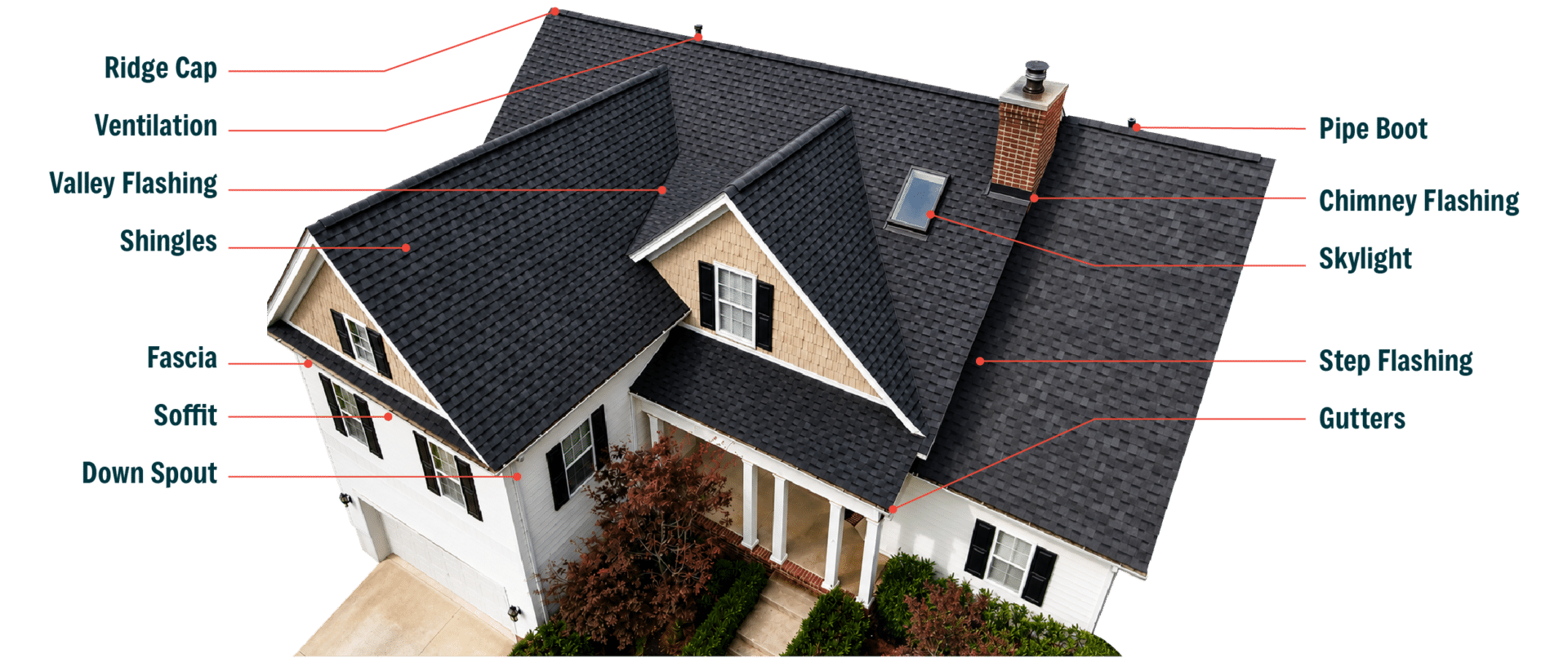
Find the Part of Your Roof That Needs Help
Your roof is more than shingles. It is a complete system of materials and components working together to protect your home from water, wind, heat, humidity, and long-term damage.
Mr. GoodRoof inspects, repairs, installs, and replaces every major part of your residential roofing system.
Roof Surface
Leak-Prone Areas
Ventilation & Structure
Edges & Water Management